Post-Fuel Ethanol Workshop Insights and Industry Trends

The ethanol industry is undergoing significant shifts, particularly pertaining to carbon intensity (CI) reduction, feedstock and technology innovations, and evolving federal tax incentives. In a recent webinar hosted by EcoEngineers, Laith Amin, vice president, Growth and Development, McCord Pankonen, managing director, North America Biofuels, Juan Vargas Ramirez, Ph.D., account manager, North America Biofuels, and Logan Leduc, manager, Life-Cycle Analysis, discussed the latest industry trends gleaned from the 2025 Fuel Ethanol Workshop (FEW) held in Omaha, Nebraska on June 9-11.

This article highlights key topics discussed in the webinar, including the latest on the Section 45Z Clean Fuels Production Tax Credit, energy attribute credits (EACs), as well as corn and sorghum kernel fiber conversion.

Impact of Section 45Z and EACs

With uncertainty around the Section 45Z tax credit building ahead of this year’s FEW, the One Big Beautiful Bill Act (OBBBA) was eventually signed into law on July 4, 2025. The bill resulted in significant changes to Section 45Z, including:

  • Extended Availability: Originally, Section 45Z was scheduled to expire after December 31, 2027. The OBBBA extends the Section 45Z credit through December 31, 2029.
  • Feedstock Sourcing Requirements: After December 31, 2025, qualifying fuel must be produced from feedstocks sourced from the United States (U.S.), Mexico, or Canada.
  • Emissions Rate Determination: The OBBBA provides clarity on the determination of emissions rates, excluding emissions attributed to indirect land-use change (ILUC). The U.S. Treasury is directed to provide distinct emissions rates for fuels derived from animal manure.
  • No Double Credit: The OBBBA clarifies that a taxpayer cannot claim the Section 45Z credit for fuel produced from a fuel that has already generated a Section 45Z credit.
  • Foreign Entity Restrictions: The OBBBA incorporates restrictions related to Specified Foreign Entities (SFE) and Foreign-Influenced Entities (FIE), applying the SFE prohibition for tax years beginning after enactment and the FIE prohibition for tax years beginning two years after enactment.

Ethanol producers recognize the importance of accurate CI calculations and robust documentation to mitigate risks and ensure compliance. Tracking and validating data, through accredited third-party verifiers, is essential for reducing underwriting costs, insurance, and maximizing the benefits of the Section 45Z tax credit.

EACs, particularly renewable energy credits (RECs), a type of EAC, are also key factors in enabling producers to offset carbon emissions by purchasing credits from renewable energy sources. The timing and quantity of renewable energy production can be challenging, especially for facilities operating 24/7. The impact of RECs on CI scores varies based on the grid’s emissions factor and a facility’s energy consumption. Producers must evaluate the cost-effectiveness of RECs and other renewable energy options to ensure a favorable return on investment.

Kernel Fiber Ethanol and ASTM E3417-25 Method Update

Interest in kernel fiber conversion remains high within the ethanol producer community. Under the Renewable Fuel Standard (RFS), kernel fiber ethanol offers access to higher-value D3 Renewable Identification Numbers (RINs), compared to D6 RINs for starch ethanol, due to its lower CI score. Producers should remain informed about the latest biotechnological advancements and regulatory updates to capitalize on this opportunity.

The United States Environmental Protection Agency’s (USEPA) approval of methods to measure kernel fiber conversion has led to more than 120 ethanol producer registrations for this pathway. The USEPA’s latest update to the American Society for Testing and Materials (ASTM) E3417-25 method, which determines the kernel fiber converted fraction from blends of corn and up to 69% sorghum, and the National Renewable Energy Laboratory (NREL) method issued in 2021, open up opportunities for ethanol producers to contribute significantly to the cellulosic biofuels mandate.

Although renewable natural gas (RNG) dominates the D3 category, with over 90% of RINs, the USEPA’s proposed revision to decrease the D3 RINs set for 2025 underscores the need for increased participation from ethanol producers. Demonstrating the capacity to produce cellulosic ethanol can help prevent further revisions and showcase the ability of the ethanol industry to help meet regulatory requirements.

In response to the latest ASTM E3417-25 method update, the USEPA requires ethanol producers with an approved in-situ kernel-fiber-to-ethanol pathway and using the ASTM method to measure the kernel fiber converted fraction and submit an engineering review addendum performed by a third-party professional engineer. This is particularly important as these producers approach their next kernel fiber converted fraction recertification. Ethanol producers must update their engineering reviews to reflect the use of the new ASTM method, regardless of feedstock.

EcoEngineers has supported more than 30 ethanol facilities in registering in-situ D3 kernel fiber pathways and provides Quality Assurance Programs (QAP) for those requiring Q-RIN status.

Summary

The ethanol industry is at another pivotal moment: production margins are thin, accentuating the importance of CI reduction as a strategy to improve federal tax incentive value.

To improve risk/return profiles, Biofuel producers must continue to focus on accurate data management, understanding their EAC options, and market diversification (e.g., kernel fiber ethanol). Staying informed on regulatory changes and technological advancements will also be crucial for navigating challenges and seizing growth opportunities. The inclusion of new feedstock options, such as sorghum, along with improved measurement methods, signals progress. Compliance with updated standards and active contributions to the D3 RIN category will help shape the future of ethanol. These ongoing advancements highlight the dynamic nature of the ethanol industry and the potential for significant innovation and growth.

For more information about our North America Biofuels services and capabilities, contact:

McCord Pankonen, Managing Director, North America Biofuels | mpankonen@ecoengineers.us 

About EcoEngineers

EcoEngineers, an LRQA company, is a consulting, auditing, and advisory firm exclusively focused on the energy transition and decarbonization. From innovation to impact, EcoEngineers helps its clients navigate the disruption caused by carbon emissions and climate change. Its team of engineers, scientists, auditors, consultants, and researchers live and work at the intersection of low-carbon fuel policy, innovative technologies, and the carbon marketplace. For more information, visit www.ecoengineers.us.

Understanding The OBBBA And What It Means For Your Business

On July 4, 2025, the One Big Beautiful Bill Act (OBBBA) was signed into law, reshaping the U.S. clean energy tax credit landscape. While the Inflation Reduction Act (IRA) of 2022 introduced broad, long-term incentives for clean energy deployment and manufacturing, OBBBA narrows the scope, introducing new restrictions, phasing out key credits, and tightening compliance with a focus on national energy dominance and domestic sourcing. For renewable fuel producers, hydrogen developers, and carbon capture operators, the implications are significant.  

EcoEngineers is uniquely positioned to help stakeholders navigate this transition. We offer compliance audits to protect credit eligibility, GREET-based lifecycle modeling for Sections 45Z, 45V, and 45Q, and credit transfer structuring under the new restrictions. We can also provide policy impact reviews tailored to your fuel or energy portfolio.

Link here to a summary of the changes and key actions to take to stay compliant and competitive.

From Climate Risk to Resilience: Strategies for Effective Climate Action

Climate action and transition plans are important tools for organizations seeking to future-proof their operations and develop pathways to net-zero emissions, in alignment with global science-based targets. As environmental changes accelerate, businesses must proactively manage climate-related risks and opportunities to ensure long-term resilience and profitability. Responding to climate risk and opportunities is especially critical for companies operating globally in jurisdictions that mandate climate-related disclosure, as it is key to maintaining operational continuity and supply chain stability. Enhancing climate risk assessment is no longer just a compliance requirement; it’s a strategic imperative for safeguarding financial performance and driving sustainable growth.

In a recent webinar hosted by EcoEngineers, an LRQA company, Dan Krekelberg, director, climate strategy at EcoEngineers, Thomas Zumbühl, associate director, advisory at LRQA, Ece Satar Pfister, senior consultant at LRQA, and Josh Bell, senior consultant at LRQA, discussed the importance of climate action planning and risk management, the evolving regulatory landscape, and practical approaches for organizations to navigate these challenges effectively.

Blueprint for Strengthening Climate Risk Management

Climate risk management is crucial for businesses as climate change disrupts supply chains, damages assets, and reshapes markets. The increasing frequency and severity of events like floods and wildfires, along with shifting regulations and evolving consumer expectations, pose significant risks. Effective climate risk management allows companies to anticipate these challenges, adapt operations, and protect financial performance. It ensures compliance with new laws, builds stakeholder trust, and fosters innovation and market opportunities, ultimately enhancing long-term resilience and competitiveness.

The global regulatory landscape is evolving rapidly, with more than 100,000 companies expected to disclose their climate-related performance in the next five years. This shift emphasizes materiality and transparency in sustainability reporting. Companies must clearly and consistently disclose risks and opportunities related to their environmental and social impact, adhering to emerging climate-reporting regulations, such as California’s Accountability Package (SB 253 and SB 261) and the EU’s Corporate Sustainability Reporting Directive (CSRD). Understanding these frameworks is critical for compliance, credibility, and long-term success.

Climate risk assessment is integral to effective climate risk management. It involves identifying and managing climate-related risks and opportunities to build trust and drive sustainable growth. The Task Force on Climate-Related Financial Disclosures (TCFD) framework provides recommendations on the information companies should disclose to help investors, lenders, and underwriters assess and price climate-related risks appropriately. The framework covers four areas: governance, strategy, risk management, and metrics and targets, aiding investors in understanding how organizations approach climate-related risks and opportunities.

Scenario analysis is a vital tool for preparing for the potential impacts of climate change on operations, strategy, and financial performance. It tests the resilience of an organization’s strategy against different climate-related scenarios, including a 2°C or lower scenario, helping organizations develop strategies to mitigate risks and seize opportunities. Conducting scenario analysis enables companies to better prepare for the future and ensure long-term resilience.

A comprehensive approach to climate risk assessment involves a multi-step process starting with scope analysis. Assessing 95 countries based on business leverage and climate vulnerability helps identify priority markets for deeper evaluation. Grouping these countries into tiers based on segmentation models allows for targeted risk management strategies. Key operational geographies like the United States (U.S.), the United Kingdom (UK), Canada, Brazil, and Australia often require focused attention due to their significant market impact.

Developing a global risk catalog is the next crucial step. Identifying material risks, including seven transition risks like carbon pricing, ESG customer requirements, and macroeconomic disruptions due to climate change, alongside five physical risks such as extreme weather events, provides a comprehensive risk profile. Recognizing climate-related opportunities, such as increased demand for sustainable products and material substitution, offers strategic advantages. This dual focus ensures a balanced approach to climate resilience.

Scenario analysis based on established frameworks like TCFD and Intergovernmental Panel on Climate Change (IPCC) guidance is essential for understanding potential future impacts. Assessing three transition scenarios—orderly net zero by 2050, disorderly delayed transition, and a hothouse world following current policies—across short, medium, and long-term timeframes (2030, 2040, and 2050) provides a robust foundation for strategic planning. Considering best, medium, and worst-case outcomes enables businesses to prepare for various futures, enhancing adaptability and resilience.

The final step is conducting a financial impact assessment. Qualitative prioritization of climate risk-related opportunities and tailored recommendations for mitigating critical risks are crucial for effective risk management. This approach not only protects businesses from the financial consequences of climate change but also improves financial resilience. Strengthening compliance with future climate-related reporting regulations positions companies ahead of current requirements, facilitating better investment and partnership decisions.

Companies evaluating climate risk under the TCFD framework are also positioned to align globally with mandatory and voluntary disclosure frameworks. In 2023, the International Sustainability Standards Board (ISSB) published a set of global sustainability standards, International Financial Reporting Standards (IFRS) S1 and S2 (ISSB Standards), which fully incorporate the recommendations of the TCFD. IFRS S1 and S2 also include elements of the industry-specific sustainability standards from the Sustainability Accounting Standards Board (SASB) and the GHG Protocol.

As of July 2025, thirty-six jurisdictions worldwide have adopted or are otherwise using the ISSB standards or are in the process of finalizing steps towards introducing them into their regulatory frameworks. This primarily includes countries, but also subnational jurisdictions, such as California’s SB 261, where reporting via the TCFD framework or IFRS standards can be used for compliance beginning January 1, 2026. To provide confidence in quality reporting to end users of the data, third-party verification and assurance of climate risk reporting is possible under existing standards and proposed auditing standards.

Summary

Climate action and transition planning have become a critical business imperative, demanding proactive measures to address climate-related risks and opportunities for resilience and long-term success. Effective management strategies enable companies to anticipate and adapt to challenges while safeguarding financial performance. Navigating the evolving regulatory landscape and conducting thorough risk assessments and scenario analyses are essential steps.

By integrating climate risk into strategic planning, businesses not only ensure future security but also position themselves as leaders in driving a sustainable global economy. A standardized approach to disclosure that includes comprehensive risk and financial impact assessment, coupled with third-party assurance, provides the quality data needed to effectively mitigate risks and unlock opportunities in a rapidly changing environment.

EcoEngineers: Your Guide to Effective Climate Action

EcoEngineers’ team of engineers, scientists, auditors, consultants, and researchers brings a multidisciplinary technical approach to administering, implementing, and supporting climate action initiatives, ensuring clients receive comprehensive and tailored solutions that fit their specific climate resilience and net-zero goals.

To learn more about our climate action planning expertise, click here.

For more information about how EcoEngineers can support your climate action and resilience efforts, contact:

Dan Krekelberg, Director, Climate Strategy | dkrekelberg@ecoengineers.us   

About EcoEngineers

EcoEngineers, an LRQA company, is a consulting, auditing, and advisory firm exclusively focused on the energy transition and decarbonization. From innovation to impact, EcoEngineers helps its clients navigate the disruption caused by carbon emissions and climate change. Its team of engineers, scientists, auditors, consultants, and researchers live and work at the intersection of low-carbon fuel policy, innovative technologies, and the carbon marketplace. For more information, visit www.ecoengineers.us.

Summary of Proposed 2026-2027 Renewable Fuel Standard Volume Requirements

By Lisa Hanke, Director, Regulatory Engagement, EcoEngineers

On June 13, 2025, the U.S. Environmental Protection Agency (USEPA) released the proposed Renewable Volume Obligations (RVOs) under the Renewable Fuel Standard (RFS) for 2026 and 2027, with a partial waiver of the 2025 cellulosic biofuel volume requirement, and other changes. Stakeholders are invited to send comments on or before August 8, 2025. 

The USEPA’s proposal reflects a deliberate approach—one that aims to support domestic biofuel and feedstock production while discouraging imports and clarifying compliance expectations. 

EcoEngineers is closely tracking the USEPA’s RFS rulemaking process and how it impacts renewable fuel producers and markets. Our team of experts is here to help you navigate these proposed changes through tailored education, stakeholder engagement, regulatory advisory, and compliance management services. Whether you’re a fuel producer, importer, or obligated party, we’re ready to support your success in this dynamic regulatory environment.

Below, we break down the key elements of the proposal.

Volume Targets: New Growth, New Metrics

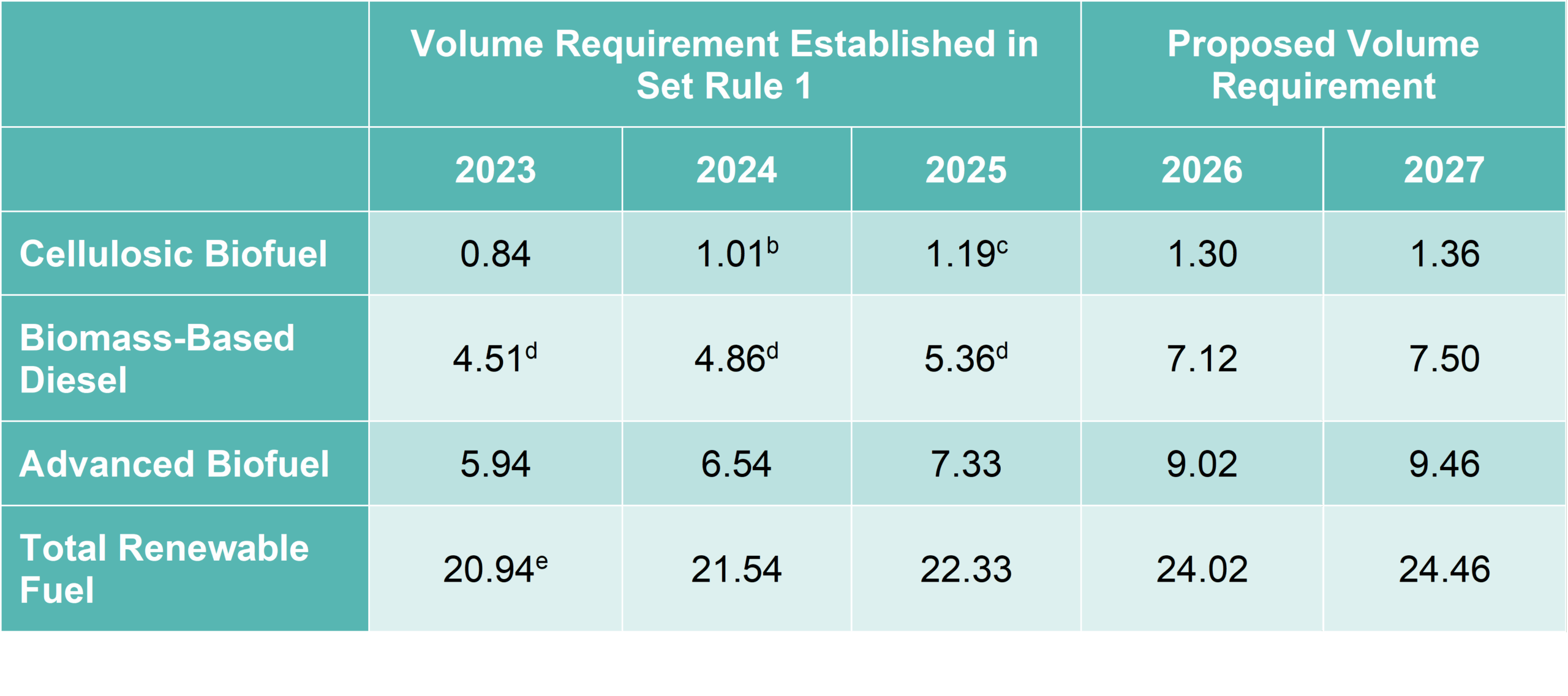
The USEPA proposes to express biomass-based diesel targets in Renewable Identification Numbers (RINs) rather than gallons, using a conversion factor of 1.6 RINs per gallon. While this shift aligns biomass-based diesel with other fuel categories, the overall volume growth is modest (Table 1). Cellulosic biofuel volumes show only slight increases from 2025 to 2027 and remain below the original 2025 targets. Implied conventional renewable fuel targets remain flat at 15 billion gallons, while total renewable fuel volumes inch upward from 22.33 billion RINs in 2025 to 24.46 billion in 2027.

Table 1: RFS Volume Requirements for 2023-2027 (Billion RINs)a

Source: USEPA

Notes:

a One RIN is equivalent to one ethanol-equivalent gallon of renewable fuel. 

b USEPA originally established a cellulosic biofuel volume requirement of 1.09 billion gallons for 2024 in the Set 1 Rule. USEPA subsequently reduced this volume requirement to 1.01 billion RINs in a separate action. 

c USEPA originally established a cellulosic biofuel volume requirement of 1.38 billion gallons for 2025 in the Set 1 Rule. The USEPA is proposing to reduce this volume requirement to 1.19 billion RINs in this action. 

d Through 2025, the BBD volume requirement was established in physical gallons rather than RINs. The USEPA is proposing to specify the BBD volume requirement in RINs, consistent with the other three renewable fuel categories, rather than physical gallons. For the sake of comparison, the USEPA converted the BBD volume requirements for 2023–2025 from physical gallons to RINs using the BBD conversion factor in 40 CFR 80.1405(c) of 1.6 RINs per gallon. 

e The total renewable fuel volume requirement for 2023 does not include the 0.25 billion RIN supplemental standard.


Finalized 2024 Cellulosic Biofuel Volume Partial Waiver

The USEPA finalized a partial waiver for the 2024 cellulosic biofuel requirement, reducing the target from 1.38 billion to 1.19 billion RINs. This follows a similar adjustment for 2025 and reflects market saturation and ongoing production delays in the cellulosic sector.

Key Policy Changes and Clarifications

  • Import RIN Reduction: To reduce reliance on foreign feedstocks and mitigate fraud risks, the USEPA proposes a 50% reduction in RIN value for imported renewable fuels and fuels made from foreign feedstocks. This change would apply starting in 2026 and includes new reporting and liability provisions for importers and domestic producers.
  • Removal of Renewable Electricity: The USEPA proposes to remove renewable electricity as a qualifying fuel under the RFS, citing its limited role in displacing fossil fuels in transportation.
  • Adjusted Equivalence Values: To better reflect fossil-derived hydrogen content, the USEPA proposes new equivalence values: 1.6 for renewable diesel and jet fuel, and 1.4 for renewable naphtha. Producers may still apply for alternative values.
  • RIN Generation Timing: The proposal clarifies when RINs must be generated, depending on the fuel type and production location. For gaseous fuels like renewable natural gas (RNG) and compressed or liquified natural gas (CNG/LNG), RINs must be generated within five business days of meeting all requirements.
  • Biodiesel Use Restrictions: Reinforcing the program’s focus on transportation fuels by proposing RINs cannot be generated for pure or neat biodiesel used for process heat or power generation.

Expanding and Refining Fuel Pathways

The USEPA proposes to add new pathways for naphtha and liquefied petroleum gas (LPG) derived from biogenic waste oils, and to clarify existing pathways with more precise language. Two new biointermediates—activated sludge and converted oils—are also proposed for inclusion.

Compliance and Oversight Enhancements

  • Small Refinery Reporting: Even if exempt from RFS obligations, small refineries would still be required to file annual compliance reports and address any carried-over deficits.
  • Auditor Registration: Third-party auditors would only need to renew their registration every two years instead of annually, reducing administrative burden.
  • Engineering Review Site Visits: Site visits must occur within six months of submitting a registration request to ensure accuracy and relevance.

Biogas Regulatory Reform Updates

The USEPA also proposes to allow biogas batches to be defined by calendar month and to expand approved measurement and calibration methods for RNG and biogas. These updates aim to align regulatory requirements with industry practices and improve data accuracy.

About the Expert

Lisa Hanke, director, regulatory engagement at EcoEngineers, has worked in the renewable fuels space for more than 18 years. Ms. Hanke led government relations and regulatory outreach in the U.S. Europe and Canada. She has extensive experience with the Renewable Fuel Standard (RFS), California’s Low Carbon Fuel Standard (LCFS), the Renewable Energy Directive (RED), the Renewable Transport Fuel Obligation (RTFO) and she closely follows the Canadian Clean Fuel Regulation (CFR) and a variety of other carbon programs across the world. Ms. Hanke was responsible for evaluations of policy, regulatory engagement, compliance, and life-cycle analysis (LCA). She has also sat on the board of directors for the Advanced Biofuels Association of Canada, the Advanced Biofuels Business Council, and the Leaders of Sustainable Biofuels.

For more information about EcoEngineers’ Regulatory Engagement and/or Compliance Management services and capabilities, contact: 

Lisa Hanke, Director, Regulatory Engagement | lhanke@ecoengineers.us    

About EcoEngineers

EcoEngineers, an LRQA company, is a consulting, auditing, and advisory firm exclusively focused on the energy transition and decarbonization. From innovation to impact, EcoEngineers helps its clients navigate the disruption caused by carbon emissions and climate change. Its team of engineers, scientists, auditors, consultants, and researchers live and work at the intersection of low-carbon fuel policy, innovative technologies, and the carbon marketplace. For more information, visit www.ecoengineers.us.

Closing the Carbon Gap: EU-UK Emissions Trading System Linkage

By Urszula Szalkowska, Managing Director, Europe, EcoEngineers

In a landmark move for climate policy and international carbon markets, the European Union (EU) and the United Kingdom (UK) recently announced their commitment to Emissions Trading Systems (ETS). 

The decision, announced at the EU-UK Summit in May, marks a significant step toward greater regulatory alignment and climate cooperation post-Brexit. For companies and stakeholders engaged in hard-to-abate heavy industries like cement, steel, aluminum, and paper, the agreement seeks to enhance market efficiency, reduce compliance costs, and strengthen climate ambition through coordinated emissions caps and mutual recognition of allowances.

The EU’s ETS, launched in 2005, is the world’s largest carbon market and a cornerstone of the EU’s climate strategy. Following Brexit, the UK established its own ETS in 2021, closely modeled on the EU’s framework but operating independently. 

This linkage of an ETS between different jurisdictions is not without precedent. The EU previously linked its ETS with Switzerland’s in 2020, demonstrating the feasibility and benefits of cross-border carbon market integration. However, the EU–UK linkage is far more consequential due to the scale and economic interdependence of the two regions.

The technical and legal work to operationalize the EU-UK ETS linkage is expected to begin immediately, with a target implementation date in 2026. 

Key Objectives and Provisions

The primary goal of linking the EU and UK ETS is to enhance the cost-effectiveness and efficiency of emissions reductions. By allowing mutual recognition of allowances, companies in both jurisdictions can trade emissions permits across borders, increasing market liquidity and price stability. The agreement also aims to:

  • Ensure a level playing field for businesses operating in both markets.
  • Strengthen climate ambition through coordinated cap-setting and compliance mechanisms.
  • Facilitate long-term investment in low-carbon technologies by providing regulatory certainty.

Both parties have committed to respecting each other’s regulatory autonomy while aligning key design features such as cap trajectories, auctioning rules, and monitoring, reporting, and verification (MRV) standards.

Implications for Industry and Stakeholders

For regulated entities, the linkage offers several advantages. First, it expands the pool of available allowances, potentially reducing compliance costs. Second, it harmonizes carbon pricing signals, reducing the risk of carbon leakage and competitive distortions. Third, it simplifies compliance for multinational firms operating in both the EU and the UK.

However, the integration also introduces new complexities. Companies will need to stay informed of evolving rules and ensure their internal compliance systems can accommodate cross-border trading. Market participants should also anticipate increased scrutiny from regulators as the linked system will require robust oversight to maintain environmental integrity and prevent fraud.

Impacts on the EU’s Carbon Border Adjustment Mechanism (CBAM)

The EU’s Carbon Border Adjustment Mechanism (CBAM), which entered its transitional phase in October 2023 and will last until the end of 2025, is designed to prevent carbon leakage by imposing a carbon price on imports of certain goods from countries with less stringent climate policies. Once fully implemented in 2026, CBAM will require importers to purchase certificates reflecting the carbon price that would have been paid had the goods been produced under the EU ETS.

The planned linkage between the EU and UK ETS could exempt UK exporters from CBAM obligations, assuming the UK’s carbon pricing is deemed equivalent to the EU’s. This would streamline trade between the two regions and reduce administrative burdens for businesses operating across borders. 

READ MOREBiogenic CO2 Is an Untapped Commodity in the Race to Net Zero

However, such an exemption is not certain. The EU will need to assess the UK ETS’s alignment with EU standards, including cap stringency, MRV protocols, and enforcement mechanisms. If the linkage is successfully implemented and maintained, UK exporters of CBAM-covered goods—such as steel, cement, and aluminum—could avoid double carbon pricing and maintain competitiveness in the EU market.

For companies in both jurisdictions, this underscores the importance of staying informed on both ETS and CBAM developments. The intersection of these policies will shape compliance strategies, supply chain decisions, and long-term investment planning.

Opportunities for Innovation and Leadership

The EU-UK ETS linkage opens the door for innovation in carbon finance, digital MRV (dMRV) solutions, and cross-border emissions accounting. Companies that proactively invest in emissions reductions and carbon market intelligence will be better positioned to capitalize on arbitrage opportunities and demonstrate climate leadership. 

Moreover, the linkage could serve as a model for future international cooperation. As more jurisdictions consider carbon pricing, the EU-UK framework may inform global efforts to create a network of interoperable carbon markets. 

Reform of the EU ETS

The linkage of the EU and UK cap-and-trade systems coincides with the announced review of the EU ETS. A review of some of the system’s elements is due by 2026 and will include an assessment of whether additional policies are needed to reach those targets. The Market Stability Reserve (MSR), which helps regulate the structural supply and demand of allowances, is also due for review by 2026. Both the EU ETS and the MSR are currently being evaluated to inform these reviews.

As part of the 2023 revisions of the ETS Directive, the monitoring and reporting of emissions was launched in 2025. Throughout 2027, a 30% higher volume of allowances will be auctioned to provide market liquidity. As in the existing EU ETS, the ETS2 will operate with a dedicated, rule-based MSR to mitigate insufficient or excessive supply of allowances to the market. 

The proposed reforms are part of the broader “Fit for 55” legislative package, aligning the ETS with the EU’s legally binding target to cut net greenhouse gas (GHG) emissions by at least 55% by 2030 under the European Climate Law. 

Climate Removals and Carbon Farming 

In 2024, the EU created a separate system of Carbon Removals and Carbon Farming (CRCF) (i.e., industrial and nature-based permanent storage and utilization of biogenic carbon dioxide (CO2)), which has led to industrial carbon removal projects being developed in both regions. The CRCF is currently excluded from the EU ETS and, therefore, cannot be used by EU ETS obligated parties as a compliance mechanism. 

There are, however, discussions taking place in the EU about the inclusion of carbon removals within the EU ETS system, an approach the UK has been considering for some time. The ability to use carbon removal as a compliance mechanism would ease compliance and operability for the majority of the industry. 

Summary

The announced intent between the EU and UK to link their respective ETSs represents a pivotal moment in climate policy and carbon market evolution. The recent agreement underscores the importance of international cooperation in addressing global emissions and sets a precedent for future market integration. However, while broader integration of carbon markets across jurisdictions may benefit market players and industries by improving efficiency and liquidity, it must not come at the expense of traceability and compliance requirements. Maintaining environmental integrity and robust oversight remains essential to the credibility and effectiveness of the system.

About the Expert

Urszula Szalkowska is the Managing Director, European Markets, and leads EcoEngineers’ European practice, supporting both European-based clients and international clients doing business in the EU. Ms. Szalkowska has more than two decades of experience working in renewable energy, fuels, climate change, and transportation. She has a deep understanding of regulations, business impact, and strategic communications in the EU. She advises businesses on compliance with national regulations in EU Member States and helps navigate the highly regulated renewable energy markets. 

For more information about how we can help you navigate the UK or EU carbon market landscape, contact: 

Urszula Szalkowska, Managing Director, Europe | uszalkowska@ecoengineers.us   

About EcoEngineers

EcoEngineers, an LRQA company, is a consulting, auditing, and advisory firm exclusively focused on the energy transition and decarbonization. From innovation to impact, EcoEngineers helps its clients navigate the disruption caused by carbon emissions and climate change. Its team of engineers, scientists, auditors, consultants, and researchers live and work at the intersection of low-carbon fuel policy, innovative technologies, and the carbon marketplace. For more information, visit www.ecoengineers.us.
Renewable Fuel Credit Market Trends and Regulatory Insights

In the dynamic landscape of renewable energy, understanding the intricacies of market pricing and regulatory impacts is crucial for stakeholders. EcoEngineers’ “California Low Carbon Fuel Standard (CA-LCFS) and Renewable Fuel Standard (RFS) Credit Pricing Analysis” report provides valuable insights into market trends and factors influencing energy credit prices.

This article provides a brief overview of recent developments in Renewable Identification Number (RIN) and California Low Carbon Fuel Standard (CA-LCFS) credit pricing, examining the implications of regulatory changes and market conditions. Subscribing to the monthly report provides actionable insights, analysis, and outlooks.

Subscribers receive curated news, in-depth analysis, and actionable insights to drive your clean energy projects. The authors of the report, Roxby Hartley, Ph.D., Climate Risk Director, Holland Heins, Carbon Consultant, Asset Development, and Kylie Bednarick, Senior Carbon Consultant, are fully immersed in these markets and have deep experience tracking and analyzing data, monitoring trends, and developing informed forecasts.

RIN Market Trends and Price Influences

D3 RIN prices have been low due to prevailing market uncertainty. At the end of 2024, D3 RIN prices dropped following the U.S. Environmental Protection Agency’s (USEPA) announcement of proposing to partially waive the 2024 cellulosic biofuel volume requirement. While the proposed waiver means the final volume obligation for 2024 is unknown, USEPA officially extended 2024’s compliance deadline, indicating a likely reduction in the 2024 volumes. This, combined with unknown renewable volume obligations (RVOs) beyond 2025 and lingering small refinery exemptions (SREs), has contributed to keeping D3 RIN prices low. The overall lack of policy clarity is causing a wide range in our price projections through 2027. As we await further information, the market remains in a state of flux, with prices staying relatively low due to the prevailing uncertainty.

While D3 RIN generation continues its annual growth trend at around 25%, the total compressed natural gas (CNG) dispensing capacity remains a limiting factor. The USEPA’s consideration of these factors in developing the 2026 RVO will be pivotal in shaping the future of the D3 RIN space. The USEPA must balance renewable natural gas (RNG) growth with CNG dispensing limitations when setting the RVO, as a strong RVO could drive prices up and incentivize the development of additional CNG stations to expand capacity, while a weak RVO could lower prices and drive RNG to alternative markets.

The transition to the new Inflation Reduction Act (IRA) Section 45Z Clean Fuel Production Tax Credit (PTC) has impacted D4 RIN prices by offering an upstream production-based carbon intensity (CI)-driven incentive structure compared to the $1-per-gallon biodiesel blender’s tax credit (BTC) point-of-sale incentive structure typically favored by downstream fuel blenders and distributors. This shift has led to a surge in D4 RIN prices, especially in April 2025, due to low D4 RIN generation in the first quarter and rumors of a higher biomass-based diesel RVO anticipated to be proposed by the USEPA for 2026 and beyond.

D4 RIN production in 2025 has been lower compared to previous years, primarily because the new Section 45Z PTC is available only for domestic producers. This has led to a drop in foreign RIN generation. Domestic production of D4 RINs has also dropped due to the Section 45Z PTC offering lower credit amounts than the previous BTC for biodiesel, renewable diesel, and sustainable aviation fuel (SAF) producers. Many producers are operating at lower rates or planning shutdowns due to low margins and uncertainty surrounding the Section 45Z PTC guidance. The forecast for D4 RIN prices over the next three years suggests they will remain in the current range, influenced by future commodity prices. However, D4 RIN prices are expected to fluctuate with the release of full Section 45Z PTC guidance and announcement of the biomass-based diesel RVO for 2026 and beyond.

CA-LCFS Credit Market Trends and Price Influences

The CA-LCFS program remains the flagship of the state’s transportation decarbonization strategy, and its success is driving imitation across many western states. The regulatory framework has established market mechanisms that incentivize innovation while providing compliance pathways for regulated entities. Credit banking mechanisms create market stability, allowing stakeholders to plan investments with confidence, in stark contrast to regulatory signals across the nation that are confusing at best.

Renewable diesel has emerged as an alternative to petroleum-based diesel, transforming California’s diesel fuel market. The technology has achieved commercial-scale deployment across multiple production facilities, utilizing feedstock portfolios that range from waste oils to energy crops. The biodiesel sector maintains its volumes, though it faces competition from renewable diesel for feedstock resources. RNG is the third pathway for decarbonizing the heavy-duty vehicle sector in the state, particularly in vehicle segments where electrification faces challenges. Dairy and agricultural sectors have become the dominant feedstock source, lowering the average carbon intensity (CI) score dramatically. SAF development is accelerating as the aviation industry pursues decarbonization objectives within a sector facing few alternative technology options. 

California’s gasoline market continues to thrive despite transportation electrification trends. Ethanol integration continues providing content within the gasoline pool, and EV use continues to grow across vehicle categories.

Looking ahead, California’s low-carbon fuel market demonstrates the viability of policy frameworks that balance environmental objectives with economic realities. The program’s success in driving technology deployment, market transformation, and CI reductions provides a blueprint for other jurisdictions pursuing transportation decarbonization.

As production capacity continues expanding across renewable diesel, SAF, and RNG, while electric vehicle adoption accelerates, California’s LCFS program positions the state to meet its climate goals while maintaining energy security and economic competitiveness. The convergence of these technologies creates a diversified, resilient transportation fuel portfolio that reduces dependence on petroleum while supporting innovation and job creation across the clean energy sector.

To gain more detailed information now and in the future, subscribe to EcoEngineers’ “CA-LCFS and RFS Credit Pricing Analysis” by contacting EcoEngineers’ client services at clientservices@ecoengineers.us.

About EcoEngineers

EcoEngineers, an LRQA company, is a consulting, auditing, and advisory firm exclusively focused on the energy transition and decarbonization. From innovation to impact, EcoEngineers helps its clients navigate the disruption caused by carbon emissions and climate change. Its team of engineers, scientists, auditors, consultants, and researchers live and work at the intersection of low-carbon fuel policy, innovative technologies, and the carbon marketplace. For more information, visit www.ecoengineers.us

Biogenic CO₂ Is an Untapped Commodity in the Race to Net Zero

The following is an article published in Carbon Herald on June 13, 2025. 

Turning Captured CO Into Verified Carbon Credits and Real Revenue

By Urszula Szalkowska, managing director, Europe, EcoEngineers

Biogenic carbon dioxide (CO2)—the emissions released when biomass or organic waste is converted into energy—has long been overlooked as a tool in climate action. Historically deemed ‘neutral’ in carbon accounting because it originates from plant matter that absorbed CO2 during growth, these emissions have flown under the radar.

But neutrality is no longer enough.

As the European Union (EU) intensifies efforts to achieve net-zero emissions by 2050, a new opportunity has emerged: capturing and monetizing biogenic CO2. When captured and stored, this CO2 qualifies as carbon removal. When utilized in processing or consumer products, this CO2 can be a valuable emission reduction. In many cases, biogenic CO2 has become a commodity that can now be quantified, certified, and monetized as a verified credit or environmental attribute.

A New Carbon Economy: Monetizing Biogenic CO2 Emissions

Industries such as ethanol production and biomass power plants emit biogenic CO2 as an inherent component of their operations. With modest upgrades, these facilities can capture these emissions and turn them into high-value carbon credits or commercial products.

The captured CO2 can be either:

  • Utilized in products like synthetic fuels, green chemicals, or construction materials, helping decarbonize supply chains; or
  • Permanently stored via nature-based solutions or industrial methods like bioenergy with carbon capture and storage (BECCS).

In either case, the project may be able to generate additional revenues by reusing the CO2. Depending on how the environmental attribute is applied—either to the original fuel or the end product—these credits can increase revenue in both compliance and voluntary carbon markets (VCM).

EU Policy Is Rapidly Catching Up 

The EU’s climate strategy is ambitious yet realistic. Decarbonization without deindustrialization is the ultimate goal, particularly for hard-to-abate sectors such as steel, cement, and aviation. To hit net-zero targets, the EU estimates that between 400 to 500 million metric tons of residual emissions must be offset annually by 2050. That’s where carbon removals come in.

To catalyze this shift, the EU introduced the Carbon Removal Certification Framework (CRCF) in 2024—a rigorous voluntary standard for validating permanent removals such as BECCS and carbon farming.

The CRCF emphasizes:

  • Accuracy in measuring carbon removals.
  • Additionality beyond practices required by mandatory regulations.
  • Durability through long-term storage and monitoring.
  • Sustainability with environmental and social safeguards.

The EU also plans to integrate carbon removals into its Emissions Trading System (ETS) and explore new financing mechanisms, such as Carbon Contracts for Differences (CCfD) and government procurement of carbon removals. CCfD is a special type of long-term delivery contract that has risen to prominence as a mechanism to provide public funding to newly built electricity generation capacity in Europe.

The EU carbon removal sector is still new and relies on a limited number of financing tools. Investment decisions mainly rely on Member State subsidies or the VCM, a decentralized market where private actors can voluntarily buy and sell carbon credits.

The sector needs more support in the coming years, as outlined in the Industrial Carbon Management Strategy, including: 

  • Developing the EU’s CO2 transport and storage infrastructure.
  • Establishing a single market to deploy large-scale carbon value chains across Europe without trade barriers.
  • Enhancing investments through the EU Innovation FundRecovery and Resilience Facility, and the European Investment Bank.
  • Developing support schemes, such as CCfD and/or government procurement of carbon removals. The United States (U.S.) and Canada have recently launched similar schemes.

In addition, other elements may also contribute to the enhancement of the EU carbon removal sector:

  • Integrating carbon removals into the EU ETS—currently under consultation procedure.
  • Supporting the role of the cross-border and international voluntary or mandatory carbon markets on a global stage could drive private finance. The Green Claims Directive, currently being discussed in the Parliament and Council, has an important role to play for the latter.

Case in Point: BECCS Projects Are Already Delivering

Stockholm Exergi, a Swedish energy provider, offers a glimpse into this future. In collaboration with EcoEngineers and Drax, Stockholm Exergi developed the first-of-its-kind monitoring, reporting, and verification (MRV) methodology for BECCS. Backed by the Swedish government with nearly $2 billion in funding, the project will permanently remove 800,000 tons of CO₂ annually, equivalent to the city’s road traffic emissions.

Private sector buyers like Stripe, Alphabet, Shopify, Meta, and McKinsey, among others, have locked in long-term purchase agreements worth US$48.6 million for delivery between 2028 and 2030. The deal is facilitated by Frontier, an advance market commitment initiative, on behalf of major corporate buyers.

In the U.S., Red Trail Energy LLC (RTE), an ethanol producer recently acquired by Gevo Inc., teamed with EcoEngineers to verify its CO₂ capture under the Puro.earth registry. The carbon removal credits generated by RTE were the first from an ethanol producer sold into the VCM, setting the standard for other industries to follow globally.

The Bottom Line: A Climate Solution That Pays

With the global carbon removal market expected to exceed $25 billion by 2029, biogenic CO2 offers a low-barrier entry point for industries already emitting it. And with corporate climate pledges piling up, the demand for verified removals is expected to grow.

Europe is building the regulatory infrastructure to make carbon removals viable, from funding innovation to certifying outcomes. Meanwhile, companies that act early will enjoy a first-mover advantage, shaping the market and setting standards. Capturing biogenic CO₂ isn’t just about hitting environmental, social, and governance (ESG) targets. It’s a way to future-proof operations, monetize sustainability, and lead the energy transition.

About the Expert

Urszula Szalkowska is managing director, Europe, and leads EcoEngineers’ European practice, supporting both European-based clients and international clients doing business in the EU. Ms. Szalkowska has more than two decades of experience working in renewable energy, fuels, climate change, and transportation. She has a deep understanding of regulations, business impact, and strategic communications in the EU. She advises businesses on compliance with national regulations in EU MS and helps navigate the highly regulated renewable energy markets. Ms. Szalkowska coordinates global climate policy and regulations in the U.S. and the EU.

For more information about how we help clients navigate the energy transition in Europe and globally, contact: 

Urszula Szalkowska, Managing Director, Europe | uszalkowska@ecoengineers.us 

About EcoEngineers

EcoEngineers, an LRQA company, is a consulting, auditing, and advisory firm exclusively focused on the energy transition and decarbonization. From innovation to impact, EcoEngineers helps its clients navigate the disruption caused by carbon emissions and climate change. Its team of engineers, scientists, auditors, consultants, and researchers live and work at the intersection of low-carbon fuel policy, innovative technologies, and the carbon marketplace. For more information, visit www.ecoengineers.us.

Navigating the U.S.-UK Ethanol Trade Deal: Compliance with the UK’s Renewable Transport Fuel Obligation

By Lisa Hanke, Regulatory Engagement Director
EcoEngineers

The United States (U.S.) and the United Kingdom (UK) recently announced a new trade deal, which is a significant milestone in international trade relations. Among its many provisions, the agreement aims to open new avenues for U.S. exports of ethanol, including the removal of the longstanding 19% tariff on U.S. ethanol, granting duty-free access to the UK market for the first time, representing an opportunity for U.S. ethanol producers to expand their market reach and increase exports.

Specifically, the U.S.-UK trade deal aims to enhance market access for various goods, including chemicals, machinery, beef, automobiles, steel, and aluminum. The agreement includes provisions for $700 million in additional ethanol exports to the UK, which already is a significant importer of U.S. ethanol. According to data published by the U.S. Department of Agriculture (USDA) Foreign Agricultural Service (FAS), nearly 13% of U.S. ethanol exports were exported to the UK last year. In terms of volumes, U.S. ethanol exports to the UK reached approximately 243.84 million gallons in 2024, representing an estimated value of $535.12 million.

As the U.S. ethanol industry prepares to capitalize on these opportunities, understanding and complying with the UK’s Renewable Transport Fuel Obligation (RTFO) becomes paramount. 

Understanding the RTFO

U.S. ethanol producers seeking to enter the UK transportation market must comply with the RTFO, which requires that fuels meet specific sustainability and greenhouse gas (GHG) emission reduction criteria. RTFO compliance is necessary if U.S. ethanol is intended for use in the UK transportation sector—either as a direct blend in gasoline (currently up to 10%) or as a feedstock for producing ethyl tert-butyl ether (ETBE), which is used as an oxygenate or octane enhancer in gasoline.

Under the main RTFO obligation, all types of feedstocks are accepted, including food-based crops such as sugar beet, sugarcane, and corn. However, their use is subject to strict sustainability criteria, and there is a cap on the volume of crop-based biofuels that can be counted toward compliance. This cap, which began at 4% of a supplier’s total fuel supply, is set to decrease to 3% by 2026 and will fall further to 2% by 2032. These limitations are designed to mitigate indirect land-use change (iLUC) and ensure environmental integrity.

U.S. Producers Must Comply

For U.S. ethanol producers, compliance with the RTFO is not optional—it is a prerequisite for market access. The RTFO requires that ethanol achieve a minimum of 55% GHG savings for facilities operating on or before October 5, 2015, and 65% if the facility began operating after this date. Additionally, sustainability data must be verified by an approved third-party verifier before Renewable Transport Fuel Certificates (RTFCs) are issued. It is worth noting that the buy-out price for the main obligation is £0.50 (US$0.67) per liter, with ethanol falling under the main RTFO obligation. The buy-out price offers an alternative method of compliance; instead of delivering a targeted volume of renewable fuel, a fuel supplier may opt to just pay this buy-out price.

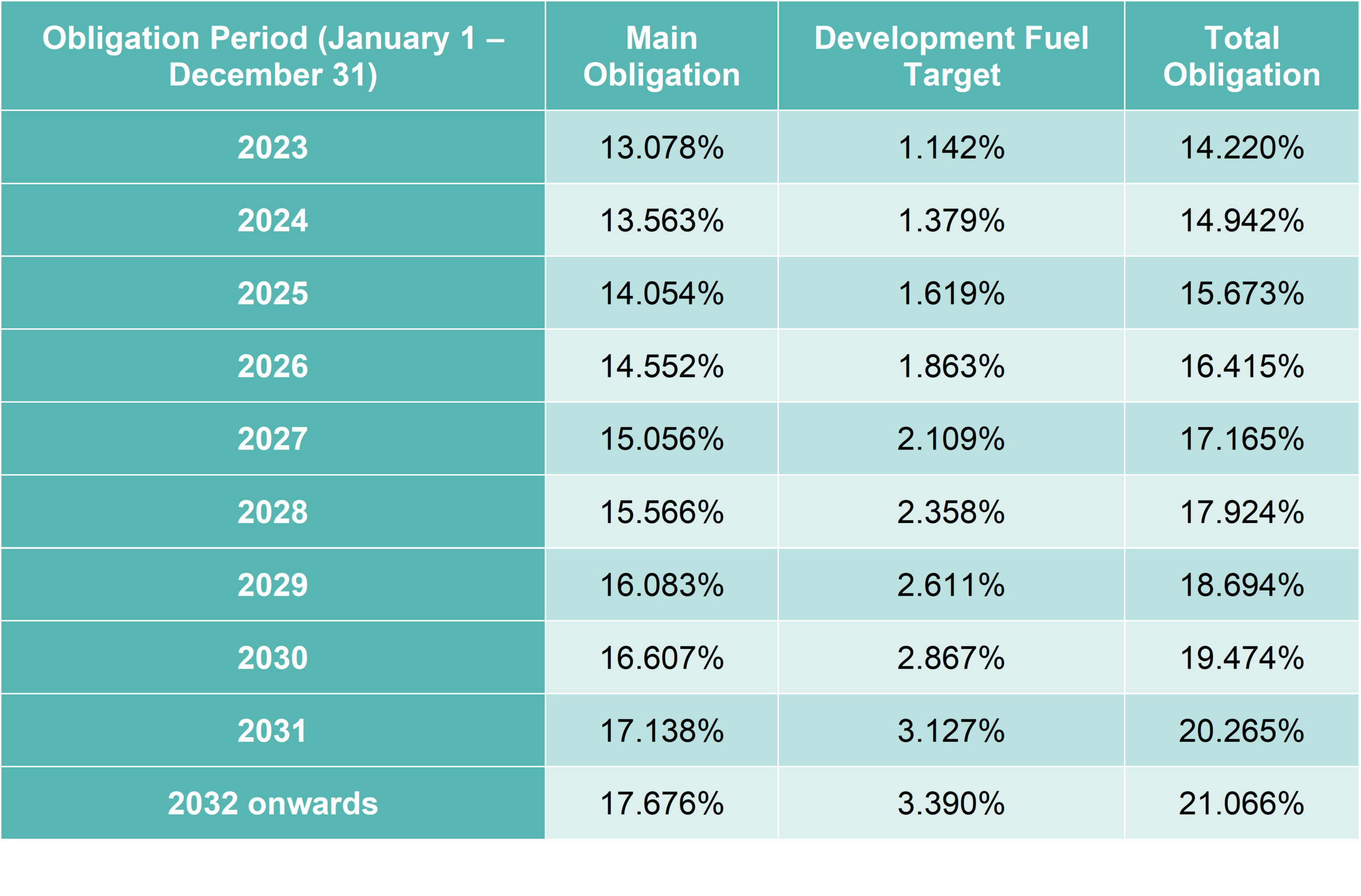
Currently, RTFCs fetch a value of approximately £0.25 (US$0.33) per about one liter (or .26 US gallons) of fuel. That value may be twice as much if advanced feedstock contributing towards the “Development Fuel Target” (e.g., agricultural wastes such as straw, husks, shells, and similar byproducts, food-industry wastes and byproducts like distiller’s grains or other fermentation residues or food waste, or lignocellulosic materials) is used (Figure 1).

Figure 1: RTFO Compliance Trajectory 

Source: UK Department of Transportation

Strategic Considerations for Exporters

The RFTO’s requirements are rigorous and multifaceted. U.S. ethanol producers looking to capitalize on the new trade deal must be prepared to: 

  • Quantify and Verify GHG Reductions: This involves a detailed life-cycle analysis (LCA) of emissions from feedstock cultivation through fuel production and transport.
  • Demonstrate Sustainability: Producers must show that their feedstocks are sourced responsibly and meet stringent land use and biodiversity criteria.
  • Maintain Traceability: The RTFO requires a mass balance system to track the flow of sustainable material through process technologies and the supply chain.
  • Undergo Third-Party Verification: Only fuels certified by recognized voluntary schemes or verified by approved auditors are eligible for RTFCs.

These requirements can be challenging for ethanol producers unfamiliar with the UK’s regulatory environment or those who have not previously exported to markets with similar standards.

Why RTFO Compliance Matters

The U.S.-UK trade deal can raise the stakes for regulatory missteps. Non-compliance can result in delayed market entry, financial penalties, or reputational damage. For this reason, it is recommended that ethanol producers turn to specialized compliance advisors who can help:

  • Interpret and apply RTFO requirements to their operations.
  • Prepare documentation and data for verification.
  • Identify opportunities to improve GHG performance and sustainability metrics.
  • Navigate the certification process efficiently and accurately.

Such support is especially valuable for companies scaling up exports or entering the UK market for the first time. It ensures that compliance is not just a box-checking exercise but a strategic enabler of market access and long-term competitiveness.

Summary

The RFTO is a sophisticated regulatory framework that demands careful attention to detail and a proactive approach to compliance strategy. As the global low-carbon fuel market evolves, the ability to navigate such frameworks will become a core competency for exporters. Whether through internal teams or external advisors, investing in compliance readiness is not just prudent—it’s essential for unlocking the full potential of international trade opportunities. 

About the Expert

Lisa Hanke, regulatory engagement director at EcoEngineers, has worked in the renewable fuels space for more than 15 years. Ms. Hanke led government relations and regulatory outreach in the U.S. and Europe. She has extensive experience with the Renewable Fuel Standard (RFS), California’s Low Carbon Fuel Standard (LCFS), and she closely follows the Canadian Clean Fuel Standard (CFS) and a variety of other carbon programs across the world. Ms. Hanke is responsible for evaluations of policy, regulatory engagement, compliance, and life-cycle analysis (LCA). She has also sat on the board of directors for the Advanced Biofuels Association of Canada, the Advanced Biofuels Business Council, and the Leaders of Sustainable Biofuels.

For more information about EcoEngineers’ Regulatory Engagement and/or Compliance Management services and capabilities, contact: 

Lisa Hanke, Director of Regulatory Engagement | lhanke@ecoengineers.us   

About EcoEngineers

EcoEngineers, an LRQA company, is a consulting, auditing, and advisory firm exclusively focused on the energy transition and decarbonization. From innovation to impact, EcoEngineers helps its clients navigate the disruption caused by carbon emissions and climate change. Its team of engineers, scientists, auditors, consultants, and researchers live and work at the intersection of low-carbon fuel policy, innovative technologies, and the carbon marketplace. For more information, visit www.ecoengineers.us.

Sustainable Aviation Fuel Credits: How US States Are Filling the Federal Policy Gap

By Holland Heins, Carbon Consultant, Asset Development

During a time when federal policy uncertainty is at an all-time high and the industry continues to wait for developments on the Inflation Reduction Act (IRA) Section 45Z Clean Fuel Production Tax Credit (PTC) to be finalized, several states are taking matters into their own hands and introducing tax credits to incentivize sustainable aviation fuel (SAF) adoption.

Minnesota, Washington, Illinois, and Nebraska have all signed SAF credit bills into law, while Wisconsin, Nevada, and New York have introduced bills to do the same. Each tax credit is unique in its eligibility criteria, including minimum greenhouse gas (GHG) reduction thresholds, feedstock requirements, and compliance obligations.

SAF is not currently a regulated fuel in the Low Carbon Fuel Standard (LCFS) programs in California, Washington, and Oregon, meaning SAF may generate credits, but there is no obligation for jet fuel producers to blend SAF, making these state credits vital to increase adoption. Also, the value of LCFS credits fluctuates based on program performance, whereas tax credits offer a dependable and fixed incentive for SAF producers and blenders.

EcoEngineers continues to monitor the evolving incentive landscape for SAF within the United States (U.S.) and globally. Our latest analysis breaks down how new state-level tax credit programs compare. (Table 1)

Table 1: U.S. State Level SAF Credit Comparison

(Source: EcoEngineers)

These state credits have distinct similarities along with key differences that SAF producers should be aware of. All credit programs have a GHG reduction requirement of at least 50%; however, Washington and Nebraska offer increasing credit amounts for additional GHG reductions. Minnesota recently introduced a new bill to award additional credit value for GHG reductions exceeding 50%. The credits in Illinois and Washington do not have a yearly volume cap, which gives them the potential to greatly increase SAF demand on a national scale.

Minnesota and Nebraska have a limit on the total amount of credits that may be awarded each year, which essentially caps the eligible SAF volume to 2.1 million gallons and 0.6 million gallons, respectively. Domestic SAF consumption totaled nearly 112 million gallons in 2024, making these tax credits a significant step in the right direction, but an immense gap remains compared to the total U.S. market supply of SAF.

Figure 1 below shows a comparison between domestic SAF consumption in 2024, as referenced from the U.S. Environmental Protection Agency’s (USEPA) D4 Renewable Identification Number (RIN) generation data, and the yearly volume limitations in Minnesota and Nebraska. Minnesota recently proposed a new bill to increase the yearly cap to $7.4 million, which equates to roughly 7.4 million gallons per year (gal/yr) of SAF.

Figure 1: Domestic SAF Consumption Compared to Volume Eligible for State-Level Credit

(Source: EcoEngineers, USEPA)

Many other states are working to develop SAF credit legislation, including Wisconsin, New York, and Nevada. In an effort to boost local jobs and economies, credits in Nevada and Wisconsin may only be available for in-state producers. New York’s bill is specifically geared toward increasing the adoption of domestically grown soybean oil and corn oil-derived SAF. The SAF credit market is rapidly evolving, shining a positive light on the future of SAF production within the U.S. EcoEngineers expects other states to follow suit as the aviation industry strives to achieve emissions reductions.

Contact EcoEngineers to determine if your SAF is eligible for current state credits or to learn how it aligns with current Canadian, European Union (EU), and United Kingdom (UK) regulations. EcoEngineers provides detailed analyses and scenario-based forecasts for all North American SAF credits and incentives, including SAF-use incentives and mandates in the UK and the EU.

About the Expert

Holland Heins is a Carbon Consultant on the Asset Development team at EcoEngineers, where she helps clients navigate low-carbon fuel policies and incentive programs and develop their renewable energy and carbon dioxide removal projects. With a focus on renewable diesel and SAF, she provides in-depth regulatory analysis and strategic guidance to support decarbonization goals across North America and the rest of the world.

For more information about how EcoEngineers can help you navigate the SAF and RD markets, contact: Holland Heins, Carbon Consultant, Asset Development | hheins@ecoengineers.us

About EcoEngineers

EcoEngineers, an LRQA company, is a consulting, auditing, and advisory firm exclusively focused on the energy transition and decarbonization. From innovation to impact, EcoEngineers helps its clients navigate the disruption caused by carbon emissions and climate change. Its team of engineers, scientists, auditors, consultants, and researchers live and work at the intersection of low-carbon fuel policy, innovative technologies, and the carbon marketplace. For more information, visit www.ecoengineers.us.

Why Quality Data is Essential in Shaping Climate Action Plans

By Dan Krekelberg, Director, Climate Strategy

Climate action plans are essential for guiding governments, businesses, and communities in their efforts to transition to a low-carbon economy and adapt to the changing climate. Climate action plans are strategic initiatives aimed at mitigating the adverse effects of climate change by reducing greenhouse gas (GHG) emissions and enhancing resilience to climate impacts. They serve as comprehensive roadmaps that outline specific measures and targets for achieving these goals. 

Data-Driven Approaches to Climate Action Planning

One of the most critical components of effective climate action planning is the availability of quality, accurate data for measuring GHG inventories and emissions. Reliable data is fundamental for understanding the current state of emissions, setting realistic targets, and tracking progress over time. Without accurate data, it can be challenging to develop effective climate strategies, allocate resources efficiently, and demonstrate accountability to stakeholders.

Data quality is important to several steps in the climate action planning process, including:

  1. Identifying Emission Sources. Accurate data is essential for identifying the primary sources of emissions within a given jurisdiction or organization. This information enables policymakers and city planners to prioritize actions that will have the most significant impact on reducing emissions. For instance, if data reveals that a substantial portion of emissions comes from the transportation sector, targeted measures such as promoting electric vehicles and improving public transportation infrastructure can be implemented.
  2. Monitoring Effectiveness. High-quality data is crucial for monitoring the effectiveness of implemented measures. By regularly collecting and analyzing data, planners can assess whether the actions taken are yielding the desired results and make necessary adjustments. For example, if a city or municipality implements a policy to increase energy efficiency in buildings, ongoing data collection can help determine if the policy is leading to the expected reductions in energy consumption and GHG emissions.
  3. Reporting and Compliance. Accurate data is vital for reporting and compliance purposes. Many climate action plans are developed in response to regulatory requirements, legislated net-zero and carbon neutrality commitments, or international agreements, such as the Paris Agreement. Accurate data ensures that reporting is transparent and credible, which is essential for maintaining trust with stakeholders and meeting legal obligations. Additionally, reliable data can support carbon market participation and other financial mechanisms that incentivize emissions reductions.

Data Protocols Are Key

Using GHG measurement protocols is essential to ensure your data is accurate and to get the most from your climate action plans. They create consistency in approach and comparison between baseline emissions and future years. Protocols used include versions of the GHG Protocol designed for cities, the public sector, and corporate reporting.

The International Council for Local Environmental Initiatives (ICLEI) U.S. Community Protocol for Accounting and Reporting of GHG Emissions and Local Government Operations Protocol are also commonly used. These protocols categorize emissions by source and scope and provide instructions on performing calculations.

These protocols are developed through a consensus-based process with broad stakeholder input and can be supported by additional sector-specific guidance and calculation tools. GHG emissions data from these protocols can be tracked annually, reported to third-party programs, and audited using third-party verification and assurance standards. 

Summary

The role of data when designing, implementing, or monitoring a climate action plan cannot be overstated. Quality, accurate data is the foundation for effective climate action plans. It enables the identification of key emission sources, the monitoring of progress, and the fulfillment of reporting and compliance requirements. As the global community continues to grapple with the challenges of climate change, the importance of robust data systems will only grow. By investing in data collection, management, and analysis, organizations can enhance their ability to develop and implement effective climate action plans that drive meaningful progress toward a sustainable future.

EcoEngineers: Your Guide to Effective Climate Action Planning

EcoEngineers’ team of engineers, scientists, auditors, consultants, and researchers bring a multidisciplinary technical approach to administering, implementing, and supporting climate action initiatives, ensuring clients receive comprehensive and tailored solutions that fit their specific climate resilience and net-zero goals.

To learn more about our climate action planning expertise, click here

About the Expert

Dan Krekelberg, Director of Climate Strategy at Eco, has more than 15 years of experience in sustainability consulting. Mr. Krekelberg specializes in advisory services on sustainability reporting, climate action plans, compliance strategies for GHG emissions, and climate risk disclosure. Before EcoEngineers, he prepared climate action and sustainability plans, managed emissions reporting and verification programs, and worked as a climate and clean energy accounting policy advisor. Mr. Krekelberg has also advised nonprofits, public agencies, and companies on energy conservation, GHG assessments, and mitigation. He holds an MS in Urban Management and Development from Erasmus University, Rotterdam, and a BA from California State University, Sacramento. 

For more information about how EcoEngineers can support your climate resilience and adaptation efforts, contact:

Dan Krekelberg, Director, Climate Strategy | dkrekelberg@ecoengineers.us 

About EcoEngineers

EcoEngineers, an LRQA company, is a consulting, auditing, and advisory firm with an exclusive focus on energy transition and decarbonization. From innovation to impact, EcoEngineers helps its clients navigate the disruption caused by carbon emissions and climate change. Its team of engineers, scientists, auditors, consultants, and researchers live and work at the intersection of low-carbon fuel policy, innovative technologies, and the carbon marketplace. For more information, visit www.ecoengineers.us