
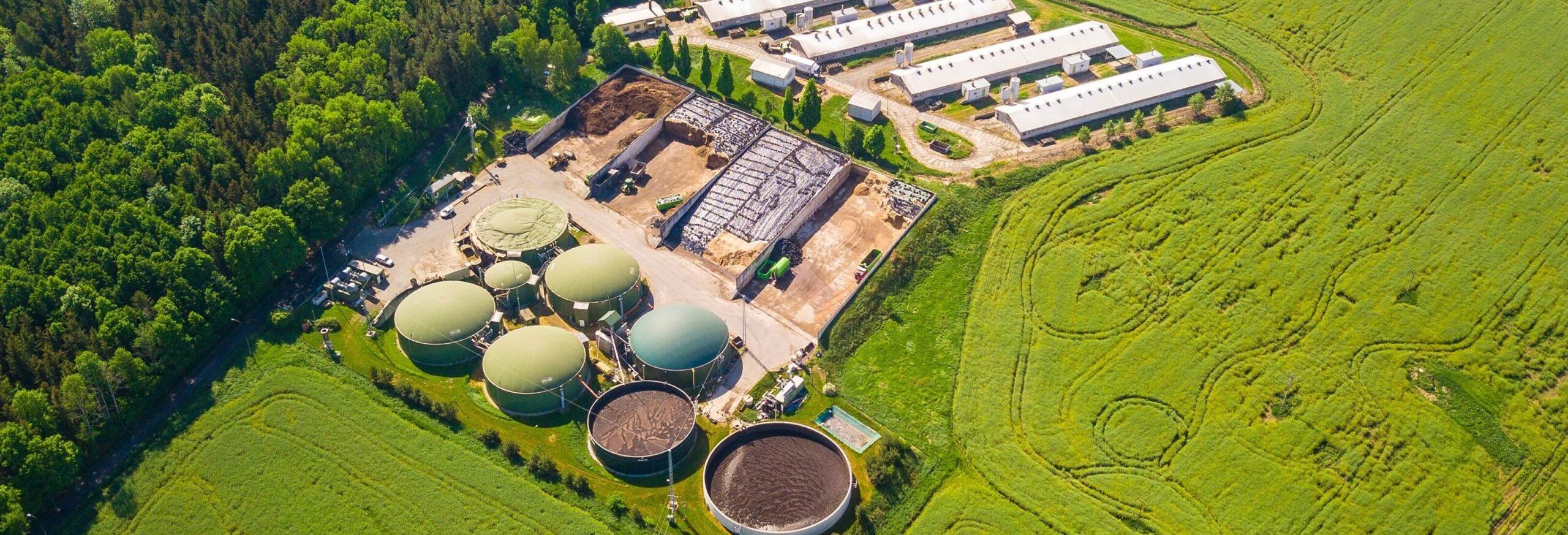
This article was originally published by Environmental Finance.
Ahead of a predicted wave of transactions, Dave Lindenmuth points out some risks and opportunities
The renewable natural gas (RNG) sector is entering a transitional phase. After several years of rapid project development, many developers now face tighter capital markets and shifting demand signals.
For investors and strategic energy asset owners, this moment may represent both risk and opportunity.
Projects that were financed during periods of strong credit prices and robust compliance markets are increasingly seeking recapitalization, portfolio consolidation, or acquisition. As a result, 2026 could see a growing number of RNG assets changing hands.
For infrastructure investors exploring this market, however, evaluating an RNG project requires a nuanced approach. Physical assets are only part of the equation. In reality, the majority of project economics depend on regulatory frameworks, environmental credit markets, feedstocks, and operational compliance systems.
Investors who understand these dynamics are far better positioned to identify high-quality assets and avoid hidden liabilities.
Why RNG investment is entering a new phase
After several years of rapid development, the RNG sector is entering a transitional period.
Historically, most RNG production has been supported by transportation fuel compliance programs such as the Renewable Fuel Standard (RFS) and California’s Low Carbon Fuel Standard (CA-LCFS).
As project development accelerated, supply has begun to outpace demand in these markets, slowing new project investment and leaving some developers seeking recapitalization or strategic buyers.
For investors, this shift could create opportunities. Smaller developers and mid-size operators that built projects during earlier market cycles are increasingly exploring partnerships, portfolio consolidation, or asset sales. As a result, 2026 may see more RNG assets entering the market, creating potential entry points for infrastructure investors with a long-term perspective.
The hidden variable: feedstock risk
Unlike traditional energy assets, RNG facilities depend heavily on upstream feedstock supply, which is mostly waste from other processes. That feedstock may come from dairy manure, landfill gas, or organic waste streams.
While these sources can appear stable on paper, they are influenced by factors outside the facility itself. Changes in agricultural economics, landfill policies, or waste diversion regulations can dramatically affect long-term supply.
Consider a dairy-based RNG project. The facility’s viability depends not only on the digester but also on the financial health of the surrounding dairy industry. If local farms close or consolidate, feedstock supply can disappear quickly.
Similarly, landfill-based projects may face competition from dedicated waste digesters that attract higher-value organic feedstocks. Even regulatory changes affecting landfill diversion can alter gas production volumes over time.
For investors accustomed to evaluating conventional infrastructure assets, these upstream risks are often overlooked.
The downstream market matters just as much
Feedstock risk is only half of the equation. RNG revenue streams are also heavily influenced by downstream regulatory and environmental credit markets.
In many projects, a large share of revenue comes from environmental credits rather than the physical gas itself.
That means investors must evaluate:
- Eligibility for compliance programs such as the RFS or LCFS.
- Potential access to emerging markets in Europe or Asia.
- Future regulatory changes affecting fuel pathways or emissions accounting
- The structure of offtake and marketing agreements.
- The timing of credit generation and sales can significantly impact working capital requirements.
Contracts governing credit ownership and compliance responsibilities can significantly affect project value. Poorly structured agreements can create situations where compliance costs outweigh revenue benefits.
Understanding these contractual dynamics is essential when evaluating acquisitions.
Compliance is not a back-office function
Because RNG revenue is tied to environmental credits, compliance systems are central to asset value.
Projects must maintain detailed documentation, operational data, and third-party verification records to generate credits under regulatory programs. In some cases, regulators require data retention for a decade or longer.
For example, agricultural RNG projects may need to retain feedstock documentation such as livestock counts or manure management records for extended periods. If that documentation is incomplete, credit generation, and therefore revenue, can be at risk.
Investors should therefore examine whether project operators maintain:
- Robust data management systems.
- Ongoing third-party verification relationships.
- Established compliance procedures.
- Clear documentation trails.
A weak compliance program is one of the most significant red flags in RNG due diligence.
Alignment among project partners
Another critical factor is incentive alignment among the various parties involved in a project.
RNG facilities often rely on partnerships between farmers, landfill operators, developers, marketers, and credit aggregators. When incentives are misaligned, operational problems can emerge.
For example, a farmer supplying manure may prioritize farm economics over the needs of the digester facility if their financial incentives are not properly structured. Similarly, marketing partners may pursue strategies that maximize their own returns rather than overall project value.
Projects where stakeholders share aligned incentives and maintain strong working relationships tend to perform far more consistently.
Proven technology, long-term opportunity
RNG remains one of the more mature renewable fuel technologies available today.
The core technology has been deployed successfully for decades, particularly in Europe. Projects generate measurable environmental benefits by capturing methane emissions that would otherwise escape into the atmosphere.
In addition to climate benefits, RNG facilities can improve air quality, reduce odors, and help agricultural operations manage manure and nutrient run-off.
For investors with a long-term infrastructure perspective, these attributes are attractive. Physical assets with proven technology and environmental benefits can remain valuable even through temporary market volatility.
The key question is not whether RNG will remain part of the energy transition. Rather, it is about which investors will successfully identify the projects positioned to perform over the long term.
A market where expertise matters
For financial investors entering the RNG sector, the biggest risk may be assuming that these projects behave like conventional energy infrastructure. They do not.
Feedstock supply chains, regulatory frameworks, compliance systems, and environmental credit markets all shape the economics of RNG assets. Evaluating these factors requires specialized expertise and a comprehensive understanding of the full project value chain.
Investors who approach RNG with that broader perspective will be best positioned to navigate the sector’s next phase of consolidation and capture the opportunities that follow.
Dave Lindenmuth is Senior Director of Growth & Development at EcoEngineers.
More EcoInsights
1 October 2026