Scientific consensus increasingly acknowledges that the Paris Agreement goal of limiting global warming to 1.5°C is now unlikely to be achieved. However, every fraction of a degree matters. The impacts of climate change — including extreme weather events, sea level rise, and biodiversity loss — worsen with each incremental increase in global temperature.
This reality only heightens the urgency to scale carbon removal alongside rapid emissions reductions. Scaling carbon removal solutions to the gigatonne level is critical to stabilizing the climate and mitigating the most severe consequences of warming.
Progress is happening: XPRIZE Carbon Removal recently announced the winners of its $100 million competition to accelerate the path from pilot-scale projects to fully deployable systems. It provides essential funding at a pivotal moment and signals that durable, verifiable carbon removal is not just a scientific ambition but a necessary, investable part of the global climate solution set.
The program showcased real advances across four removal pathways — air, rocks, ocean, and land — with technologies like enhanced rock weathering, biomass carbon storage, and ocean alkalinity enhancement moving closer to commercial viability. The grand prize of $50 million was awarded to Mati Carbon, a Houston-based start-up working in India, Zambia, and Tanzania that provides an enhanced rock weathering (ERW) solution. Runners-up NetZero, a French biochar company operating in Brazil, Vaulted Deep, a U.S.-based waste management company, and UNDO Carbon, based in Scotland and Canada, were awarded $15 million, $8 million, and $5 million, respectively. Additionally, two XFACTOR awards of $1 million each were given to Planetary and Project Hajar.
Launched in 2021, the goal of the four-year global XPRIZE competition was to catalyze the development of a new generation of carbon removal solutions that could create high-quality and durable carbon removal credits. The competition drew more than 1,300 teams from 88 countries to create new methodologies for carbon dioxide removal (CDR), setting a challenging goal of demonstrating the removal of at least 1,000 tonnes of carbon dioxide in the final year of the competition.
EcoEngineers participated in this program by providing independent third-party performance verifications for eight of the 20 finalists, including Mati Carbon and NetZero. We leveraged our extensive expertise in life-cycle analysis (LCA), carbon removal technologies, and greenhouse gas monitoring, reporting, and verification (MRV) to conduct a thorough evaluation of each project and confirm that the stated environmental benefits were measurable and verifiable.
Continued innovation, strong MRV frameworks, supportive policy, and investment are needed to expand these solutions and deliver carbon removals at the scale required to secure a livable future.
For more details on the winners and the competition, visit the XPRIZE website.
The carbon dioxide removal (CDR) industry stands at a critical juncture where credibility depends on robust audit practices. As more projects enter the market and new technologies emerge, the need for reliable verification is vital for the integrity of the market. In his latest whitepaper, Roxby Hartley, Ph.D., climate risk director at EcoEngineers, provides a comprehensive guide to ensuring the credibility and effectiveness of CDR audits.
These requirements address the complete audit cycle, from understanding the hierarchical nature of CDR validation to selecting appropriate assurance levels, managing the dynamic nature of audits, ensuring auditor competency, and maintaining transparency. The guidance provided balances the need for rigorous verification with the practical constraints faced by innovative CDR projects.
As the CDR industry grows, one question keeps surfacing: How do we know if these projects deliver what they promise? The answer lies in high-quality auditing. However, not all audits are created equally. Success in carbon removal verification requires understanding and implementing five key requirements that separate effective CDR audits from the rest.
Understand the Audit Hierarchy: Establishing a clear hierarchy for methodology audits, project validation, and verification of carbon removal claims is crucial for systematic validation.
Align Assurance with Claims: Selecting the appropriate level of assurance based on project maturity and capabilities ensures accurate verification.
Embrace the Dynamic Nature of Audits: Recognize that audits are investigative processes that adapt to evidence and uncover areas needing more attention.
Choose Competent Auditors: Ensure that auditors have the right expertise at each stage of the audit process, from scientific competency to practical audit experience.
Make Results Public: Sharing audit results and methodological approaches drives industry-wide innovation and builds market confidence.
The whitepaper emphasizes the importance of transparency, systematic validation, and competent verification to maintain trust in the CDR industry. By following these guidelines, CDR projects can defend their carbon removal claims and contribute to industry-wide improvement.
Read and download the whitepaper “Five Requirements for High-Quality CDR Audit” by clicking on the thumbnail below.
The carbon dioxide removal (CDR) industry stands at a critical juncture where credibility depends on robust audit practices. As more projects enter the market and new technologies emerge, the need for reliable verification is vital for the integrity of the market. This article outlines five essential requirements for high-quality CDR audits, drawing from practical experience in methodology development and project verification.
These requirements address the complete audit cycle, from understanding the hierarchical nature of CDR validation to selecting appropriate assurance levels, managing the dynamic nature of audits, ensuring auditor competency, and maintaining transparency. The guidance provided balances the need for rigorous verification with the practical constraints faced by innovative CDR projects.
As the CDR industry grows, one question keeps surfacing: How do we know if these projects deliver what they promise? The answer lies in high-quality auditing. However, not all audits are created equally. Success in carbon removal verification requires understanding and implementing five key requirements that separate effective CDR audits from the rest.
1. Understanding the Audit Hierarchy
Based on our experience in developing methodologies and conducting audits, we recommend implementing a clear hierarchy to ensure the robust verification of carbon removal claims.
First should come the methodology audit. Here, a CDR approach would be evaluated against recognized standards like ISO14064 or registry requirements such as Gold Standard. This master blueprint must pass scrutiny before project implementation begins. Getting the methodology right is the first rung on the ladder to having verifiable credits.
Next comes project validation. Once a methodology passes muster, auditors verify that a specific project correctly implements this approved methodology. This validation confirms that the project design aligns with the methodology’s requirements for measuring, reporting, and verifying (MRV) carbon removal.
The final step is non-negotiable: All carbon removal claims must be verified against the validated project design, including any methodologies and/or protocols used. This verification is essential – it’s the only way to ensure that promised carbon removal outcomes are being delivered. What makes this process particularly robust is its flexibility for improvement. Each audit iteration presents opportunities for refinement. Different auditors might highlight different aspects of the project that could be enhanced, bringing fresh perspectives and diverse expertise. While this might mean adjusting processes or updating documentation methods, these changes ultimately strengthen the project and improve the accuracy of carbon removal accounting.
2. Align Assurance with Claims
The level of assurance for CDR audits is governed by ISO 14064-3:2019, which sets the international standard for greenhouse gas (GHG) validation and verification. However, choosing the right level isn’t just about picking the highest possible assurance – it’s about selecting what’s achievable and appropriate for the project.
Reasonable Assurance
ISO 14064-3 defines reasonable assurance as providing a high but not absolute level of confidence. This involves detailed sampling of data across critical measurement points, verification of calculation methodologies, cross-checking of primary data sources, review of monitoring systems and controls, and site visits during key operational periods.
Limited Assurance
Under ISO 14064-3, limited assurance involves a less granular review of data collection processes, spot-checking of critical calculations, a focus on system design rather than comprehensive data verification, and fewer site visits with more remote verification.
Understanding Real-World Constraints
When planning a CDR project audit, pressure may be felt to achieve the highest possible assurance level. However, the reality is more nuanced. Many innovative CDR projects face inherent limitations that make complete or even reasonable assurance impractical. Consider a direct air capture (DAC) facility testing new absorbent technology – some parameters simply can’t be measured with traditional methods yet. Or consider an enhanced weathering project in a remote location where frequent site visits would be prohibitively expensive or logistically impossible.
3. Don’t Prescribe What Auditors Want to See – Embrace the Dynamic Nature of Audits
What many project developers don’t realize is that audits rarely follow a straight line from start to finish. Think of an audit as an investigation that follows the evidence where it leads. Although there might be a temptation to pre-package everything an auditor is expected to see, this approach often misses the mark.
A straightforward plan to verify carbon removal calculations might initially be in place, but inconsistencies in the data could require deeper investigation. An initial site visit might reveal that the monitoring system needs additional controls, triggering a broader review of the measurement processes.
This fluid nature of audits isn’t a flaw – it’s a feature. As auditors dig deeper into the project, they often uncover areas that need more attention. A simple spot check might reveal patterns that suggest the need for more comprehensive sampling. What started as a routine review of system controls might expand into a detailed examination of specific processes when unexpected variables emerge.
4. Choose Competent Auditors – The Right Expertise at the Right Time
Choosing an auditor is an important step. Some registries require auditors to have American National Standards Institute (ANSI) National Accreditation Board (ANAB) certification. This prescribed requirement can be written into a methodology even if they aren’t requirements at the registry level. ANAB requires internal checks for auditors, including conflicts of interest (COIs). This is critical because COIs are an insidious and systemic problem that reduces the quality of audits and, thereby, the integrity of the credits being sold.
Selecting appropriate auditors requires understanding what expertise is needed at each stage of the process. Different phases of validation and verification demand different levels of technical competency.
Methodology Validation: Deep Expertise Required
At this critical first stage, while methodologies are often developed by world-leading scientists pushing the boundaries of CDR innovation, they need to be validated by auditors who combine strong scientific understanding with practical audit experience. These auditors must have the following:
Scientific Competency:Advanced scientific understanding of carbon cycle dynamics, biogeochemical processes, measurement technologies, uncertainty quantification, and the ability to evaluate scientific models.
Critical Audit Knowledge: Understanding of additionality, permanence, leakage, and life-cycle analysis (LCA) across attributional, consequential, and displacement impacts.
Project Validation:A technical understanding is critical. Similar to methodology validation, project validation requires auditors with a solid scientific understanding of the CDR technology and practical knowledge of industry standards.
Carbon Removal Verification:Well-documented projects enable a broader auditor pool. Once the methodology is validated and the Project Design Document (PDD) is properly established, verification of carbon removal reports becomes more straightforward. A well-written PDD creates a framework that allows consistent verification by different auditors.
This combination of scientific expertise, technical, and audit experience is essential. Their strong scientific backgrounds enable them to evaluate methodologies effectively, while their audit expertise establishes proper verification frameworks.
5. Make Results Public – Transparency Drives Innovation
The carbon removal industry advances faster when we learn from each other. While protecting proprietary technology is essential, sharing audit results and methodological approaches creates a rising tide that lifts all boats, or in this context, CDR projects.
Methodology development benefits enormously from public scrutiny. When draft methodologies are opened for public comment, the entire industry gains valuable insights. Industry experts can identify potential gaps, while scientists challenge assumptions. Practitioners bring real-world implementation experience to the table, flagging potential challenges before they become problems.
Publishing project boundaries and scope decisions establish precedents for similar projects and create consistent approaches across the industry. As more projects share their LCA approaches, we’re developing better practices for boundary setting, uncertainty management, and displacement effect calculations.
When it comes to sharing audit results, CDR projects must balance transparency with confidentiality. The key is focusing on information that advances industry knowledge and helps establish standards while carefully protecting truly confidential business information and competitive advantages.
Conclusion
The path to credible carbon removal claims requires careful attention to each of these five requirements. While no audit system is perfect, following these guidelines helps ensure that CDR projects can defend their carbon removal claims while contributing to industry-wide improvement.
Key takeaways:
The audit hierarchy provides a framework for systematic validation and verification.
Choosing the right assurance level depends on project maturity and capabilities.
Expect and embrace the dynamic nature of audits.
Match auditor expertise to the project phase – scientific expertise is crucial early, while good documentation enables broader verifier pools later.
Transparency builds market confidence and advances industry standards.
As the CDR industry matures, these requirements will likely evolve. However, the fundamental principles they represent – systematic validation, appropriate assurance, dynamic investigation, competent verification, and transparent reporting – will remain essential. Projects that embrace these principles strengthen their credibility and contribute to building a more robust and trusted carbon removal industry.
The challenge of climate change demands that we get this right. While individual projects may focus on specific removal technologies, our collective success depends on building and maintaining trust in CDR verification. Through careful attention to these audit requirements, we can ensure that the carbon removal industry continues to grow with scientific integrity and effective verification practices, ultimately contributing to a sustainable future for all.
Download the whitepaper “Five Requirements for High-Quality CDR Audit” by clicking on the thumbnail below.
By David LaGreca, Managing Director, Carbon Markets
EcoEngineers
Carbon dioxide removal (CDR) is gaining momentum as a critical component of global efforts to address climate change. With an increase in net-zero pledges from organizations and advancements in CDR technologies, 2025 promises to be a pivotal year for this rapidly evolving sector.
CDR encompasses a wide range of solutions to capture and store carbon dioxide (CO2) from the atmosphere. Rudimentary CDR solutions, such as pyrolysis kilns and traditional methods like growing trees, are being replaced by advanced engineered solutions. These include direct air capture (DAC) and biomass energy with carbon capture and storage (BECCS). Additionally, complementary hybrid solutions are emerging, such as converting organic waste into biochar, which is then added to soil to improve soil health and sequester CO2 for long periods.
Industry stakeholders—governments, corporations, and investors—are increasingly focusing on scalable and economically viable CDR solutions to meet climate goals.
Below are six trends we expect to shape the CDR landscape in 2025:
1. With Scale Comes Investment
In contrast to the initial growth stages and interest in CDR credits, new and untested approaches are at a disadvantage. This was evident from the relative decline in venture capital investments in ocean/marine CDR approaches in 2024. Companies that have met delivery targets are attracting more investment in the CDR sector. Consolidation is a natural outcome of a maturing market, and in a nascent market like CDR, early signs of this trend are starting to emerge. Over the past three years, a flurry of fascinating and sometimes audacious CDR approaches have been tested commercially and scientifically. Unfortunately, some have struggled to secure funding or demonstrate sufficient evidence for their outcomes. Today, larger offtake agreements are increasingly awarded to parties with a proven track record of successful agreements and market deliveries. Start-ups, on the other hand, must rapidly scale up, innovate, or diversify their income streams to attract investors’ attention.
2. Policy to Support CDR Growth
Policies like Article 6 of the Paris Agreement, the European Union’s (EU) Carbon Removals and Carbon Farming (CRCF), and similar policies in the United Kingdom (UK), Canada, Singapore, and others are helping to establish industry credibility and drive capital to the emerging CDR industry. In recent years, the United States (U.S.) has become a prominent supporter of CDR through research and tax policy. However, recent uncertainty surrounding U.S. regulations and tax policy could present an opportunity for the voluntary carbon markets (VCM) to step up where policy may fall short. Early-to-mid-stage tech-based CDR companies have been able to secure offtake agreements through direct purchasing incentives. At the same time, policy frameworks have laid the groundwork for accelerating deployments in 2025 and beyond. The often-discussed merger of the VCM and compliance markets remains elusive, although several overlapping initiatives provide a positive foundation for gradual integration this year. For instance, the European Union’s (EU) Emissions Trading System (ETS) and the U.S. Inflation Reduction Act (IRA) both support CDR projects. Moreover, the Integrity Council for Voluntary Carbon Markets (ICVCM) has established quality standards that align with compliance market requirements.
3. Public Sentiment Continues to Center on Technology-Driven Approaches to Fight Climate Change
As public targets and Nationally Determined Contributions (NDCs) consistently fall short, and the news becomes increasingly direr with depictions of an already changing climate, many sectors of the public, such as environmental organizations, research institutions, and government agencies, have vocally rallied around CDR as the primary tool to turn back the clock on this issue. Whether emerging from hope or nihilism, this suite of technologies has garnered broad public acceptance. Carbon crediting remains somewhat controversial, but innovative CDR technologies like direct air capture with carbon storage (DACCS), BECCS, and biomass carbon removal and storage (BiCRS) are an ever-popular panacea.
4. Nature-Based Carbon Removals to Fill the Gap
Among the many methods for achieving carbon removal, the relative affordability and near-term scalability of nature-based solutions are driving significant investment and ongoing credit retirement. Afforestation, reforestation, and revegetation (ARR), along with projects that capture and store CO2 in coastal and ocean ecosystems (e.g., blue carbon), have become a viable option for buyers seeking large credit volumes in the near term. The notion of shorter-duration permanence has been largely overshadowed by the numerous co-benefits of tree planting and revegetation. Large offtake deals were signed in 2024 in this category with both industrial and technology companies, indicating broad-based interest. Examples include Microsoft’s commitment to buy 8 million metric tonnes of nature-based removal credits from BTG Pactual Timberland Investment Group (TIG) through 2043. Other, somewhat smaller, deals included French multinational electric utility Engie SA pre-purchasing 5 million metric tonnes of nature-based removal credits over the 2030-2039 period from Catona Climate, a carbon credit intermediary, and Microsoft’s commitment to buy 1.6 million metric tonnes of removal credits over 30 years from a reforestation project in Panama. Some companies have looked to nature-based removals as an alternative to Reducing Emissions from Deforestation and Forest Degradation (REDD+) and Improved Forest Management (IFM) avoidance credits while maintaining a few direct community and ecosystem benefits inherent to such projects. As CDR technology advances, forests and ecosystems continue to fill in for deliveries from technological solutions.
5. CDR Project Developers Have More Options to Market
Project developers in enhanced rock weathering (ERW), biochar, and BECCS have been exploring non-credit markets as a means to support growth and stabilize revenues. Projects interacting directly with global food and product supply chains have found some receptivity for insetting their removal or avoidance projects within the consumer goods and renewable fuel industries. Carbon insetting empowers companies to actively reduce their Scope 3 emissions by funding emissions reduction initiatives directly within their value chain. This means companies aren’t waiting for suppliers to act; instead, they’re directly facilitating emission reductions by financing projects that enable their suppliers to avoid, reduce, or sequester greenhouse gas (GHG) emissions. Though still a largely bilateral and ad-hoc market, this is a space to watch as Scope 3 emission reporting moves from an academic exercise to direct and impactful climate action. Whether or not the Science Based Targets initiative (SBTi) allows the use of carbon removal credits for near-term corporate GHG reduction goals or long-term net-zero targets aligned with the Paris Agreement, CDR projects designed for climate targets are finding new, alternative pathways to market. Combined with impending access to compliance markets in the EU and elsewhere, these new markets for carbon removals are slowly reducing the demand constraint on CDR, limiting industry growth and investment opportunities.
6. Measurement, Reporting, and Verification (MRV) Will Take Center Stage
In contrast to 2022 and earlier, when a handful of well-funded CDR companies could secure offtake agreements based on generic claims derived primarily from lab studies and theory, developers are now being held to a higher standard. Projects transacting bilaterally based on weak protocols have given way to rigorous quantification and traceability facilitated by expanding written methodologies and crediting registries to parallel the breadth of emerging CDR approaches. At last count, more than 45 CDR-specific methodologies were listed on carbon registries or used by proprietary developers. This represents at least 10 times the number available at the end of 2022 and illustrates this sector’s ever-critical nature of diligent MRV. This number will continue to grow as the market strives for greater precision and specificity in measuring the impact of a greater variety of CDR project types.
In summary, the CDR sector is poised for significant growth in 2025, driven by increased investment in provable approaches, supportive policies, and public sentiment favoring technology-driven solutions. Nature-based removals are expected to dominate due to their affordability and scalability while project developers explore new markets to stabilize revenues. MRV will become increasingly important to ensure the credibility of CDR projects. As the CDR industry evolves, stakeholders must stay informed and adaptable to capitalize on emerging opportunities.
About EcoEngineers
EcoEngineers is a consulting, auditing, and advisory firm with an exclusive focus on energy transition and decarbonization. From innovation to impact, EcoEngineers helps its clients navigate the disruption caused by carbon emissions and climate change. Its team of engineers, scientists, auditors, consultants, and researchers live and work at the intersection of low-carbon fuel policy, innovative technologies, and the carbon marketplace. For more information, visit www.ecoengineers.us.
About the Author
David LaGreca is the Managing Director of Carbon Markets at EcoEngineers, with experience in all major GHG programs across the Americas. Mr. LaGreca has brought projects through every phase, from conception through financing, methodology development, project registration, and verification. He has worked on hundreds of diverse projects, including reforestation, energy, methane abatement, blue carbon, and novel carbon removal technologies. He has developed and audited GHG inventories for communities, companies, and governments. Mr. LaGreca works to strategically align projects with markets to make decarbonization a viable business.
For more information about how EcoEngineers can help you navigate the CDR sector and set your business or organization up for success in 2025 and beyond, contact:
The renewable natural gas (RNG) industry stands at a market inflection point. Over the past year, advancements in sustainability initiatives, evolving market dynamics, and regulatory shifts have reshaped the landscape for RNG project development. These changes underscore the growing importance of RNG as a cornerstone in achieving global carbon reduction goals. Understanding these shifts and capitalizing on emerging opportunities will be critical for stakeholders aiming to stay ahead in this rapidly evolving sector.
Below, we explore three key trends that could influence the trajectory of the RNG industry in 2025.
1. Optimizing Existing Projects
One of the main trends is a shift from developing new RNG projects to optimizing existing ones. This focus is critical as projects begin to reach steady state operations and lower carbon credit prices put pressure on project cash flows. A focus on carbon intensity (CI) scores can help projects maximize carbon credit revenue and tax credits, minimize operating expenses, and eliminate project downtime. Additionally, exploring voluntary carbon markets (VCM) and considering market optionality, such as incorporating co-digestion methods into existing RNG assets to capture D3 and D5 Renewable Identification Number (RIN) values, are strategies being considered to mitigate risks and maximize returns.
Finding the right offtake partners and increasing compressed natural gas (CNG) consumption is crucial for supporting RNG market growth. The Canadian Clean Fuel Regulations (CFR) market presents new opportunities, while the challenges of voluntary market offtake deals and the saturation of the RFS market need to be carefully managed.
Future Opportunities
Looking ahead, there are exciting opportunities in developing second and third-generation uses of biogas and RNG, such as hydrogen and sustainable aviation fuel (SAF). The potential for biogas-to-electricity projects and leveraging the IRA 45V and 45Z tax credits to spur new projects are also promising avenues. Additionally, refineries using biogas to produce lower CI gasoline and diesel is an innovative approach that could further enhance the sustainability of the RNG market.
In summary, the RNG market is at a pivotal point, with numerous opportunities for growth and optimization. By staying informed about market trends, regulatory changes, and future opportunities, we can continue to drive the industry forward and contribute to a more sustainable future.
For more information about how Eco can help you navigate the biogas and RNG industries, please contact:
Hydrogen project development is a multifaceted process that requires meticulous planning and strategic execution. From assessing project feasibility and capital formation considerations to conducting life-cycle analyses (LCA) and identifying off-takers, each step is crucial for successfully deploying hydrogen technologies.
In a recent webinar hosted by EcoEngineers (Eco), Tanya Peacock, managing director, California and Hydrogen for Eco, and John May, managing director, Hamilton Clark Sustainable Capital Inc., discussed the essential components of hydrogen project development, offering insights into best practices and considerations for companies entering the hydrogen sector.
Hydrogen Project Development Essentials
1. Secure Funding
Securing funding is a critical initial step in developing hydrogen projects. Early-stage hydrogen technology companies often require multiple rounds of equity to mature and scale their technologies to a point that is suitable for commercial deployment. Investment banking firms like Hamilton Clark Sustainable Capital play a key role in facilitating debt and equity financing mechanisms, helping these companies achieve technical readiness for commercial scale. The process involves raising development equity for front-end engineering design (FEED) and final investment decision (FID) phases, followed by project construction financing, which typically includes a mix of debt and equity. This structured approach ensures hydrogen projects are financially viable and ready for large-scale implementation.
LCAs are another essential component of hydrogen project development. An LCA evaluates the environmental impacts associated with each stage of hydrogen production, from feedstock selection to production technology. This comprehensive assessment helps determine the carbon intensity (CI) of the produced hydrogen, crucial for regulatory compliance and securing incentives such as the Section 45V hydrogen production tax credit provided under the Inflation Reduction Act (IRA) of 2022. Conducting an LCA early in the project development process can save time and money by providing a clear understanding of the environmental footprint and aiding in negotiating off-take agreements and securing financing.
3. Understand the Market and Regulations
Understanding market incentives and regulatory frameworks is vital for maximizing the potential of hydrogen projects as various federal, state, and international incentives support clean hydrogen production. For instance, the California Low Carbon Fuel Standard (CA-LCFS) and the U.S. Department of Energy’s (USDOE) Regional Clean Hydrogen Hubs Program (H2Hubs) offer opportunities for hydrogen developers. Additionally, the voluntary carbon market (VCM) allows companies to offset their greenhouse gas (GHG) emissions by investing in clean hydrogen. Staying informed about these incentives and regulatory requirements enables project developers to design compliance programs that optimize incentive revenues and ensure long-term project viability.
4. Identify Off-Takes
Identifying and securing off-takers is crucial for hydrogen project development. Off-takers are entities that purchase hydrogen for applications such as oil refining, heavy-duty transportation, and the creation of hydrogen derivatives like clean methanol and green ammonia. Transit agencies, for example, are increasingly adopting fuel-cell electric buses, which can be adapted for heavy-duty trucks. Establishing off-take agreements early in the project development process is essential for securing financing, as these agreements provide a guaranteed market for the produced hydrogen and help mitigate market risks.
Importance of Verification and Reporting
Verification and reporting are essential elements of the carbon credit process. For example, the Section 45V hydrogen production tax credit mandates annual verification of GHG claims by an independent third-party verifier. This process involves a comprehensive audit of the CI score, which is calculated using models like the Argonne National Laboratory’s Greenhouse Gases, Regulated Emissions, and Energy Use in Technologies (GREET) model. To ensure the CI score’s accuracy, the verification process requires substantiating all inputs, including electricity production and technology emissions. This thorough process is vital for maintaining the integrity of the credits and ensuring the claimed reductions are quantified based on scientific rigor and verifiable.
Selecting the right auditor is crucial for companies involved in carbon markets. Different programs, such as the CA-LCFS, have specific requirements for verifiers. Companies must ensure their chosen verifier meets these requirements to avoid compliance issues. In the VCM, registries often provide lists of approved verifiers, and word-of-mouth recommendations can also be valuable. The priority is to collaborate with experienced professionals who can handle the complexities of the verification process and deliver credible, third-party assessments.
Summary
Hydrogen project development is a multifaceted yet rewarding endeavor that demands a strategic approach to various critical aspects, including funding, environmental assessment, market incentives, and off-taker identification. A comprehensive understanding of these components enables companies to overcome challenges and contribute to the clean hydrogen economy. With the increasing demand for clean hydrogen driven by decarbonization efforts, there are significant opportunities for innovation and investment.
Similarly, the evolving carbon market offers both opportunities and challenges. Rigorous verification and reporting are essential for ensuring credible carbon credits. Businesses must select the right auditors and advisors to navigate this complex environment effectively. For hydrogen producers, early planning and a deep understanding of market dynamics and regulatory requirements are crucial for successful project development. Staying informed and proactive in this growing market is vital for leveraging carbon credits and advancing towards a sustainable future.
For more information on Eco’s hydrogen services and capabilities, please contact:
By Lauren Tarde, Account Manager and Carbon Consultant, VCM
EcoEngineers
Embedding sustainability into corporate strategies is crucial for organizations to meet evolving investor pressure, consumer demand, and regulatory requirements. Understanding the environmental impact of products and operations is not only optional; it’s also a necessity. Life-cycle assessments (LCAs) are the cornerstone of a sustainable future, providing the insights necessary to drive informed decision-making, achieve regulatory compliance, and enhance market competitiveness. After all, you can’t manage what you can’t measure, and you can’t lower your environmental impact if you don’t first measure it.
Why Consider LCAs?
An LCA provides a systematic and comprehensive evaluation of a product’s environmental impacts throughout its entire life cycle—from raw material extraction to end-of-life disposal. LCAs typically assess the global warming potential, or carbon footprint, of a functional unit but can also encompass other impact categories such as land use, eutrophication, acidification, water use, and more. This powerful tool can be tailored to your specific needs, whether you are just beginning your sustainability journey or are already a leader in your field.
Below are 10 reasons why you should consider incorporating LCAs into your sustainability strategy:
1. Achieve Carbon-Reduction Targets and Net-Zero Goals
LCAs are a powerful tool for informing net-zero decisions by providing precise measurements, prioritizing carbon-reduction strategies, and reporting progress in alignment with global standards and stakeholder expectations. This allows companies to ensure their sustainability efforts are both credible and impactful.
2. Support Carbon Dioxide Removal (CDR) Methodologies
Comprehensive LCAs aid in the development and validation of CDR methodologies. Detailed insights into the carbon footprint at each stage of the CDR process can help you meet and exceed your carbon reduction targets. LCAs can help identify the true potential for carbon removal in a CDR project and offer a complete and transparent picture of what is achievable.
3. Enhance Supply Chain Diagnostics
According to a report by the Carbon Disclosure Project (CDP), companies’ supply chains are responsible for over 11 times their direct emissions—more than 90% of their total GHG emissions. LCAs, when done correctly, can provide a granular view of your supply chain, identifying emission hotspots where carbon reduction opportunities could exist and operations could be optimized. Working with experienced LCA practitioners ensures you gain actionable insights to drive meaningful change.
4. Facilitate Product Comparisons and Compliance
LCAs provide a robust framework for comparing products and processes, whether for internal innovation or external benchmarking. By quantifying environmental impacts, LCAs can help companies make informed decisions that align with product sustainability goals and comply with emerging regulations.
5. Support Business Scaling and Investment Decisions
Transitioning from lab-scale projects to full-scale production or a global presence requires reliable data. LCAs ensure your technology remains sustainable and environmentally responsible at scale, supporting your growth while maintaining sustainability.
6. Provide Credibility and Piece of Mind
In a time where corporate credibility is paramount, LCAs validate the sustainability credentials of your products and processes. They can also validate marketing claims and provide transparency, as well as reassurance to customers, investors, and regulators, enhancing your brand’s credibility.
The flexibility of LCAs, from cradle-to-grave analyses to specific focus areas like carbon footprints or water usage, can aid in preparing Product Carbon Footprints (PCFs) and Environmental Product Declarations (EPDs). These calculations are essential for compliance in regulated or voluntary carbon markets (VCM) and competitive market positioning.
8. Identify Cost-Saving Opportunities
By identifying emission hotspots within the supply chain or production process, LCAs can uncover opportunities for process efficiencies and cost reductions. By enabling companies to optimize their resource usage and minimize waste, LCAs contribute to cost savings while helping companies achieve their environmental goals.
9. Training and Thought Leadership for Internal Teams
LCAs can empower your internal teams with the knowledge and skills needed to engage in meaningful sustainability efforts and avoid greenwashing. Many firms and organizations, including Eco through its educational platform, EcoUniversity, offer webinars and thought leadership materials, including blogs and whitepapers. These resources can foster and inform data-driven decisions.
10. Boost Innovation and Competitive Advantage
LCAs can help drive innovation within a company by identifying opportunities for eco-friendly product design and sustainable practices. This not only helps in reducing environmental impact but can also position a company as a leader in sustainability, giving you a competitive edge in the market.
Ready to get started? At EcoEngineers (Eco), we offer a range of LCA services, from preliminary LCAs as projects are being initiated to panel-reviewed, International Organization for Standardization (ISO)-compliant LCAs meeting industry standards to help organizations gain an accurate measurement of their carbon footprint across Scope 1, 2, and 3 emissions. With a team of renowned scientists who have performed more than 1,000 LCAs since 2015 and accreditation by the American National Standards Institute (ANSI) National Accreditation Board (ANAB), in accordance with the ISO, we can help you determine the best solution that fits your specific needs.
Contact us today to learn more about our LCA services and how we can support your path to a sustainable future.
About EcoEngineers
EcoEngineers is a consulting, auditing, and advisory firm with an exclusive focus on the energy transition. From innovation to impact, we help you navigate the disruption caused by carbon emissions and climate change. We help you stay informed, measure emissions, make investment decisions, maintain compliance, and manage data through the lens of carbon accounting. Our team of engineers, scientists, auditors, consultants, and researchers live and work at the intersection of low-carbon fuel policy, innovative technologies, and the carbon marketplace. Eco was established in 2009 to steer low-carbon fuel producers through the complexities of emerging energy regulations in the United States. Today, our global team is shaping the response to climate change by advising businesses across the energy transition. Together, we can create a world where clean energy fuels a healthy planet.
About the Author
Lauren Tarde is a carbon consultant and account manager specializing in VCMs and product LCAs. A skilled SimaPro modeler, Ms. Tarde assesses environmental impacts and fosters transformative change across diverse industries, including fashion, golf, agriculture, biochar, and e-waste. She has authored methodologies and built sustainability programs. Her commitment to sustainability and strong communication make her a key asset in driving positive industry change.
For more information about our LCA services and capabilities, contact:
This podcast was first published by The Crude Life on June 28, 2024.
David LaGreca, Managing Director of Voluntary Carbon Markets Services, EcoEngineers, joins Jason Spiess and Steve Bakken on Townsquare Media’s SuperTalk 1270 Talk of the Town to share his experience working on the first voluntary carbon sequestration for ethanol in the nation.
Voluntary carbon sequestration involves the capture and storage of carbon dioxide (CO2) through various projects funded by private entities. This process aims to offset emissions by removing CO2 from the atmosphere or preventing its release. These projects often include reforestation, afforestation, and soil carbon enhancement, among others.
Key Aspects of Voluntary Carbon Sequestration:
Market Dynamics: Voluntary carbon markets allow businesses and individuals to purchase carbon credits to offset their emissions. These credits finance projects that sequester carbon, contributing to overall climate goals.
Verification and Standards: Projects in voluntary carbon markets must adhere to stringent verification and monitoring standards to ensure their effectiveness. Organizations like Verra and the ICVCM set these standards, ensuring that carbon credits represent real and verifiable climate benefits.
Global Initiatives: Various global initiatives and evolving models are enhancing the structure and credibility of voluntary carbon markets, making them more robust and effective in addressing climate change.
Economic Incentives: Voluntary carbon credits direct private financing to climate-action projects, enabling initiatives that might not receive funding otherwise. This can stimulate economic growth while promoting environmental sustainability
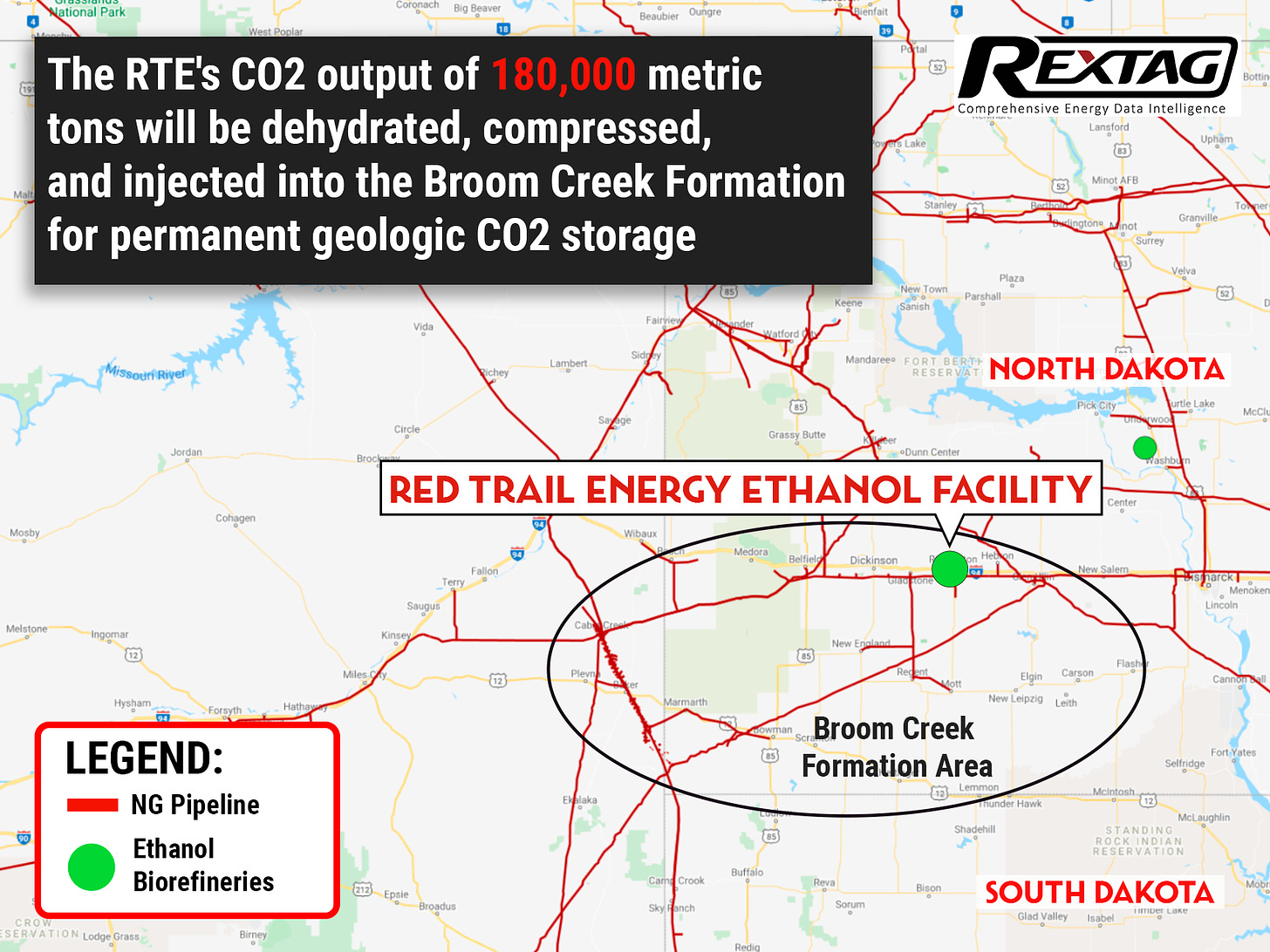
The Red Trail Energy (RTE) Carbon Capture and Storage (CCS) project represents a significant milestone in the integration of carbon capture technology within the ethanol production industry.
Located near Richardton, North Dakota, this project is a pioneering effort to reduce carbon dioxide (CO2) emissions from ethanol production, making it more sustainable and competitive in markets with stringent low-carbon fuel standards.
Project Overview
The RTE CCS project officially commenced operations in July 2022. This project involves capturing CO2 emissions from the ethanol production process and securely storing them underground. This initiative aims to capture more than 90% of the CO2 emissions produced by the ethanol facility, significantly reducing its carbon footprint.
Technology Used
The CCS technology employed by RTE includes several advanced components:
Capture: CO2 is captured from the fermentation process during ethanol production. This step involves separating CO2 from other gases using amine-based solvents.
Compression: The captured CO2 is compressed to a supercritical state to facilitate transport and injection.
Transportation: The supercritical CO2 is transported via pipelines to the injection site.
Injection and Storage: The CO2 is injected into deep geological formations, such as saline aquifers, where it is securely stored and prevented from entering the atmosphere.
Environmental and Economic Benefits
Implementing CCS at RTE’s ethanol plant brings both environmental and economic benefits. By significantly reducing CO2 emissions, the project helps mitigate climate change impacts.
Additionally, it enhances the competitiveness of RTE’s ethanol in markets with low-carbon fuel programs, potentially leading to economic incentives and regulatory advantages.
Milestones and Statistics
Start of Operations: The project began capturing and storing CO2 in July 2022.
Capture Efficiency: The technology can capture over 90% of the CO2 emissions from the ethanol production process.
Emissions Reduction: The project aims to reduce the net CO2 emissions of the ethanol plant, contributing significantly to the overall goal of lowering the carbon intensity of ethanol fuel.
Conclusion
The Red Trail Energy CCS project is a landmark development in the ethanol industry, showcasing how advanced carbon capture technology can be effectively integrated to reduce greenhouse gas emissions.
This project not only positions RTE as a leader in sustainable ethanol production but also sets a precedent for other industrial facilities aiming to lower their carbon footprints.
To contact LaGreca, click here for his LinkedIn Profile or Company Website.
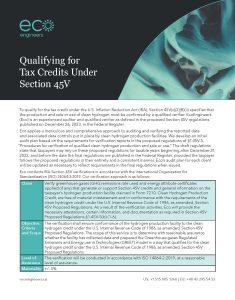
To qualify for the tax credit under the U.S. Inflation Reduction Act (IRA), Section 45V(c)(2)(B)(ii) specifies that the production and sale or use of clean hydrogen must be confirmed by a qualified verifier. EcoEngineers (Eco) is an experienced auditor and qualified verifier as defined in the proposed Section 45V regulations, published on December 26, 2023, in the Federal Register.
Eco applies a meticulous and comprehensive approach to auditing and verifying the reported data and associated data controls put in place by clean hydrogen production facilities. We develop an initial audit plan based on the requirements for verification reports in the proposed regulations of §1.45V-5, “Procedures for verification of qualified clean hydrogen production and sale or use.” The draft regulations state that taxpayers may rely on these proposed regulations for taxable years beginning after December 31, 2022, and before the date the final regulations are published in the Federal Register, provided the taxpayer follows the proposed regulations in their entirety and a consistent manner. Eco’s audit plan for each client will be updated as necessary to reflect requirements in the final regulations when issued.
Eco conducts IRA Section 45V verifications in accordance with the International Organization for Standardization (ISO) 14064:3:2019. Our verification approach is as follows:
EcoEngineers is accredited by ANSI National Accreditation Board (ANAB) as a greenhouse gas (GHG) verification body in accordance with ISO standards ISO/IEC 17029:2019, ISO 14065:2020, and ISO 14064-3:2019.
For more information, please contact: Tanya Peacock, Managing Director, California and Hydrogen | tpeacock@ecoengineers.us
About EcoEngineers
Eco is a consulting, auditing, and advisory firm with an exclusive focus on the energy transition. From innovation to impact, we help you navigate the disruption caused by carbon emissions and climate change. We help you stay informed, measure emissions, make investment decisions, maintain compliance, and manage data through the lens of carbon accounting. Our team consists of engineers, scientists, auditors, consultants, and researchers with deep expertise in global fuels policy, energy, and carbon markets, and alternative solutions to meet energy demands. Eco was established in 2009 to steer low-carbon fuel producers through the complexities of emerging energy regulations in the United States. Today, our global team is shaping the response to climate change by advising businesses across the energy transition. Together, we can create a world where clean energy fuels a healthy planet.